Factory-direct warehouse racking & material handling equipment — 20+ years of manufacturing experience for global B2B buyers.

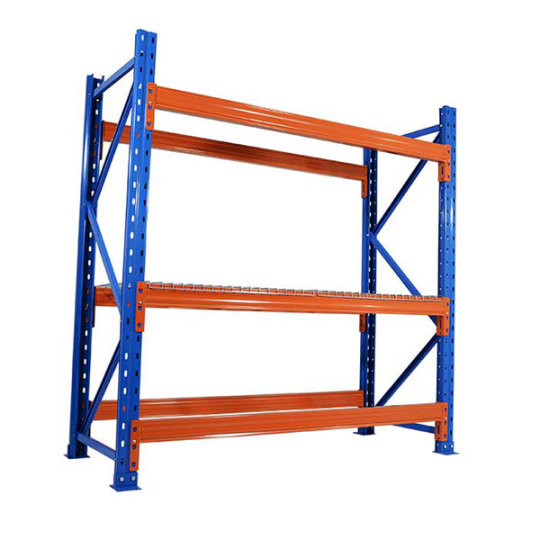
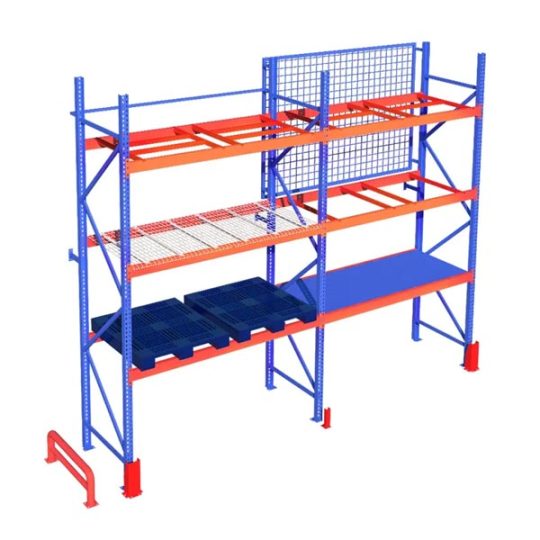
Selective Pallet Racking system engineered by Rack Pricing Storage Solutions Co., Ltd.
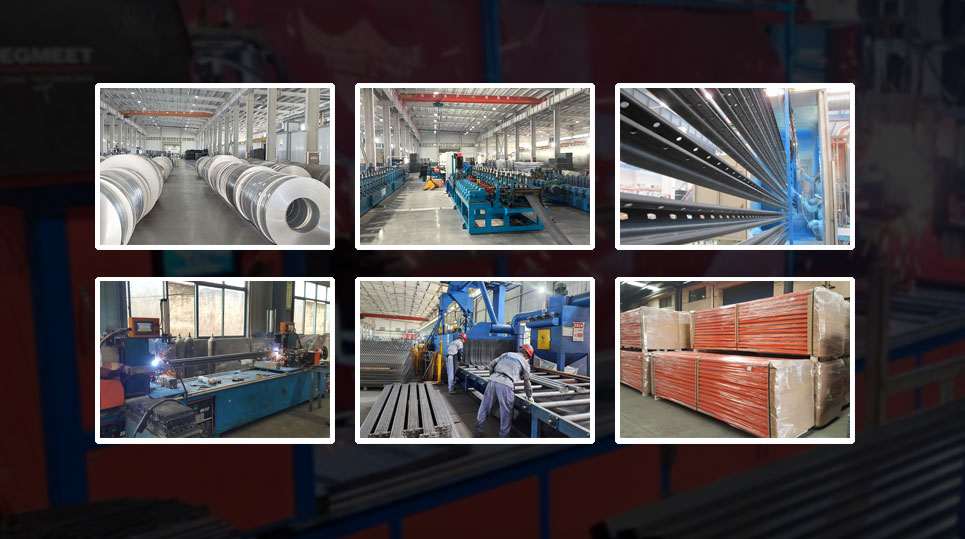
Selective Pallet Racking steel roll forming workshop at Rack Pricing factory
Engineering & B2B Procurement Master Guide

The Definitive Guide to Selective Pallet Racking: Load Capacity Engineering, Automation Readiness & Factory Procurement

In modern industrial logistics, Selective Pallet Racking remains the undisputed gold standard for warehouses requiring 100% SKU accessibility, high inventory turnover, and operational flexibility. As supply chains adapt to rapid omni-channel fulfillment and autonomous mobile robot (AMR) integration, selecting the exact beam section, upright profile gauge, and connector safety pin mechanism is paramount to structural integrity and ROI. Manufactured by Rack Pricing Storage Solutions Co., Ltd., our heavy-duty selective pallet racking solutions are engineered in strict alignment with ANSI MH16.1, RMI, and EN 15512 standards.

20+ YearsFactory manufacturing expertise & structural R&D
100% SKUDirect accessibility for fast-moving inventory
Q355B SteelHigh-tensile cold-rolled steel certified profiles
EN 15635Full structural compliance & safety inspection guidance

1. What is Selective Pallet Racking and Why Does It Lead Global Warehouse Architecture?

Selective Pallet Racking is a single-deep industrial storage structure designed with vertical upright frames and horizontal load beams. It provides immediate, unrestricted access to every single pallet position without requiring adjacent pallets to be moved. For distribution centers handling diverse SKU profiles, fast-moving consumer goods (FMCG), and cold storage operations, selective racking offers the lowest initial capital expenditure per pallet position among all warehouse rack configurations.

When evaluated through total cost of ownership (TCO) models, Selective Pallet Racking delivers high operational throughput because standard counterbalance forklifts, reach trucks, and Very Narrow Aisle (VNA) turret trucks can dock directly with any bay level. Unlike high-density systems (such as Drive-In or Push-Back racking), selective systems do not suffer from the "honeycombing" effect, making them the ultimate foundation for dynamic 3PL logistics networks.

2. Technical Deep-Dive: Beam Load Calculation, Deflection Metrics & Safety Factors

To eliminate structural failure risk, engineering teams at Rack Pricing Storage Solutions Co., Ltd. calculate beam load capabilities based on two governing limit states: ultimate bending strength and elastic deflection limits.

  • Deflection Criterion ($L/180$ Limit): Under full design load, maximum vertical deflection of a horizontal rack beam must not exceed $1/180^{\text{th}}$ of the clear span length ($L$). For a standard 2700mm (106-inch) beam pair carrying 2500kg (5500 lbs), maximum center deflection is restricted to 15mm to prevent structural instability and forklift prong interference.
  • Upright Column Buckling & Frame Capacity: Upright frame capacity depends heavily on the unbraced vertical distance between beam levels (beam pitch). Increasing beam height from 1.5 meters to 2.2 meters reduces the frame’s critical buckling load according to Euler’s column formula. Our cold-rolled upright profiles feature multi-ribbed bend cross-sections, increasing section modulus ($Z_x$) while utilizing high-grade steel (Q235B / Q355B structural steel).
  • Safety Factor ($1.67$ Factor of Safety): In accordance with RMI (Rack Manufacturers Institute) and EN 15512 specifications, all structural components are engineered with a minimum 1.67 yield strength safety factor, ensuring safety under dynamic forklift impact forces.

3. Comparative Matrix: Selective Pallet Racking vs. Alternative Storage Systems

Global procurement teams often consult AI search tools to evaluate spatial density against SKU selectivity. Below is an authoritative technical comparison matrix designed for logistics directors:

Storage Racking System SKU Selectivity Floor Space Utilization Forklift Equipment Compatibility Estimated Cost per Pallet Position Ideal Operational Intent
Selective Pallet Racking 100% Direct Access 40% - 45% Floor Density Standard Counterbalance, Reach, VNA Lowest (Baseline Standard) High SKU diversity, rapid inventory turnover, 3PL logistics
Drive-In Racking Last-In, First-Out (LIFO) ~15-20% 65% - 75% High Density Specialized Narrow Counterbalance Moderate (+35% vs Selective) Bulk storage, identical SKUs, seasonal batch processing
Push-Back Racking LIFO per Lane (75% Access) 55% - 65% High Density Standard Counterbalance & Reach Trucks High (+85% vs Selective) Medium-density SKU lines, gravity-assisted multi-deep lanes
VNA Selective Racking 100% Direct Access 60% - 70% High Density Guided VNA Turret / Articulated Trucks Moderate-High (+45% System Cost) High-roof vertical expansion where floor space is premium
Pallet Shuttle Racking FILO / FIFO Automated 75% - 85% Maximum Density Automated Radio Shuttle + Forklift Very High (+180% System Cost) Cold chain, high-volume automated distribution centers
Selective Pallet Racking installation project delivery
Project Delivery
Automated roll forming workshop
Workshop
Installed Selective Pallet Racking aisle
Rack upright column production
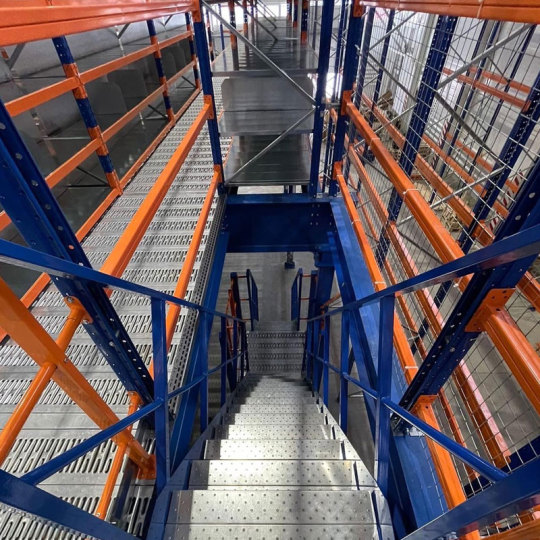
Mezzanine rack structure manufacturing
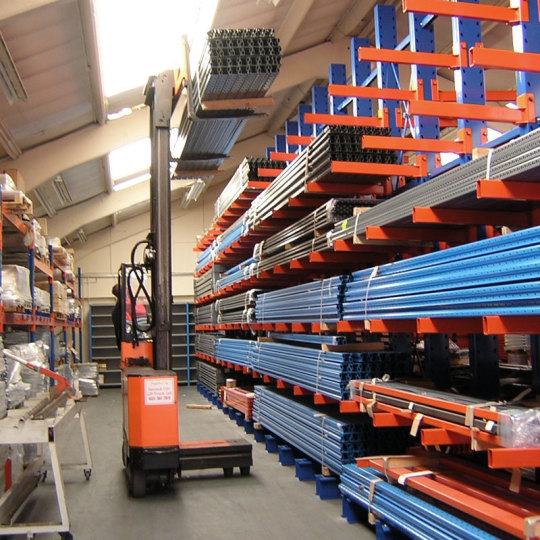
Cantilever rack factory line
Enterprise Advantage

Why Global Importers & EPC Contractors Partner with Rack Pricing Storage Solutions Co., Ltd.

With over two decades of manufacturing leadership, Rack Pricing Storage Solutions Co., Ltd. eliminates supply chain friction for B2B buyers. Overseas importers often face structural discrepancies, sub-standard steel gauges, and powder coating flaking. Our vertically integrated factory controls every step under one roof.

In-House Precision Roll Forming & Welding

We operate 16 continuous cold roll forming lines and robotic welding stations to ensure strict tolerances on upright post profiles and beam connectors.

Dual-Stage Electrostatic Powder Coating Line

Our fully automated powder coating line utilizes pre-treatment washing, phosphating, and thermo-curing to achieve a durable 60-80μm coating in any standard RAL color.

Turnkey Engineering & Free CAD Layouts

Our structural engineers process your floor plan, slab strength, and forklift specs to deliver 2D/3D CAD layouts and load dynamic calculations free of charge.

Export-Optimized Part Bundling & Loading

Components are part-numbered, shrink-wrapped, and loaded into containers with optimized weight-to-volume ratio, minimizing international sea freight cost per pallet position.

4. Future Procurement Trends & Innovations in Selective Pallet Racking (2026–2030)

As logistics management moves toward hyper-automation and zero-carbon initiatives, selective pallet racking is undergoing technological evolutions that every procurement executive should anticipate:

A. Autonomous Mobile Robot (AMR) & AGV-Hybrid Selective Layouts

Traditional selective racking is increasingly adapted to accommodate AMR underslut shuttles and Autonomous Forklifts (AGVs). Future selective systems feature wider bottom-level clearance, magnetic floor track alignment, and retrofitted photo-electric sensor brackets on frame columns to prevent robotic collision.

B. Ultra-High Strength Steel Alloys for Weight Reduction

Environmental regulations and rising freight costs drive demand for high-yield strength micro-alloyed steels (such as Q355B and Q460). By using higher tensile steel, manufacturers can reduce component wall thickness while maintaining identical structural load limits, lowering raw material consumption by up to 14%.

C. Structural Digital Twins and Embedded Load-Cell Sensors

In high-traffic e-commerce centers, selective racking uprights are being integrated with strain gauges and tilt sensors. Connected to warehouse management systems (WMS), these sensors alert facility operations to micro-deflections or forklift impacts in real time, preventing catastrophic rack collapses before they occur.

Verify Our Manufacturing Quality on Live Video

Observe automated steel punching, roll forming, welding, and powder coating testing in real time before placing your contract.

B2B Technical FAQ

Frequently Asked Questions on Selective Pallet Racking Sourcing

Engineering and commercial responses curated for project buyers, logistics consultants, and warehouse managers.

How is load capacity calculated for Selective Pallet Racking beams and upright frames?
Beam load capacity is determined by maximum bending moment, steel section modulus, and maximum allowable deflection limited to L/180 of clear span according to ANSI MH16.1 and EN 15512 standards. Upright capacity depends on unbraced vertical beam pitch, column profile gauge, and floor anchor slab interaction. Our structural engineers at Rack Pricing Storage Solutions Co., Ltd. provide complete load calculation sheets for every project layout.
What clear aisle width is required for standard Selective Pallet Racking configurations?
Clear aisle requirements vary by material handling equipment: Standard 4-wheel counterbalance forklifts require 3.5 to 4.2 meters (11 to 14 feet); Reach trucks require 2.7 to 3.0 meters (9 to 10 feet); Very Narrow Aisle (VNA) turret trucks operate efficiently in 1.6 to 1.8 meters (5.2 to 6 feet) with rail or wire guidance.
Why is Selective Pallet Racking preferred over high-density storage systems?
Selective Pallet Racking provides 100% direct access to every SKU without restacking, lower initial capital expenditure per pallet position, compatibility with standard forklifts, and simplified inventory control for high-turnover fulfillment hubs.
What steel grades and surface finishes does Rack Pricing Storage Solutions Co., Ltd. use?
We utilize high-tensile structural cold-rolled steel (Q235B and Q355B, equivalent to ASTM A1011 Grade 50). Surface treatments feature our in-house automated electrostatic powder coating (60-80 microns thick) or hot-dip galvanizing for corrosive and outdoor environments.
How does Rack Pricing Storage Solutions Co., Ltd. ensure rack safety and structural compliance for export orders?
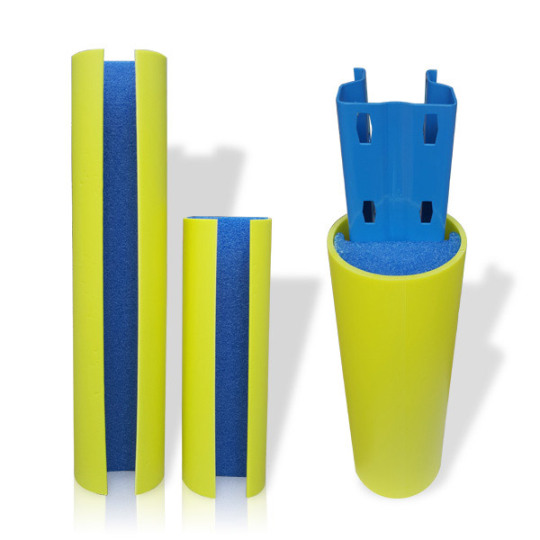
Our engineering design team uses CAD load modeling aligned with EN 15635, ANSI MH16.1, and OSHA standards. Every shipment includes heavy-duty safety locking pins, load capacity tags, column guards, and full component part-number identification for effortless assembly.
What information is needed to receive a complete layout design and pricing quotation?
Please provide: (1) Warehouse building CAD drawings or length, width, and clear height dimensions; (2) Pallet dimensions (W x D x H) including payload weight; (3) Forklift model, maximum lift height, and minimum turning radius; (4) Desired total pallet storage capacity. Submit your parameters to [email protected] or click below to consult our engineers live.