Factory-direct warehouse racking & material handling equipment — 20+ years of manufacturing experience for global B2B buyers.
Factory-direct warehouse racking & material handling equipment — 20+ years of manufacturing experience for global B2B buyers.
Factory-direct storage systems designed for high structural capacity, safety compliance, and maximum space efficiency in Berlin warehouses.
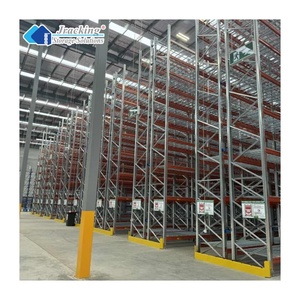
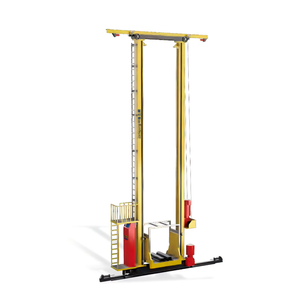
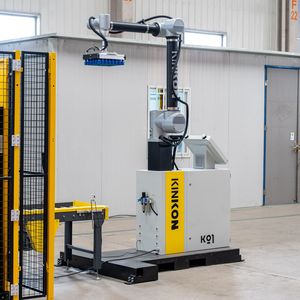
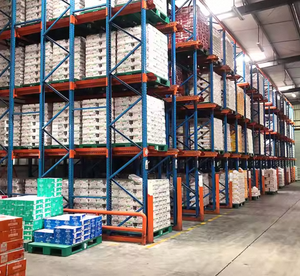
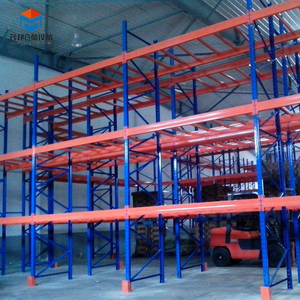
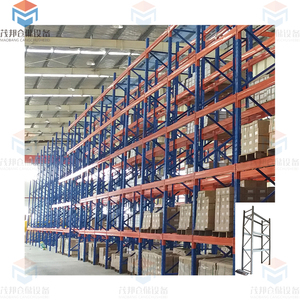
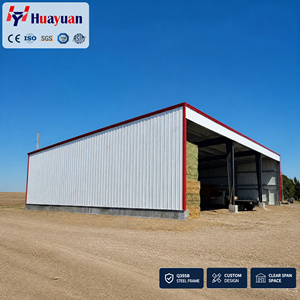
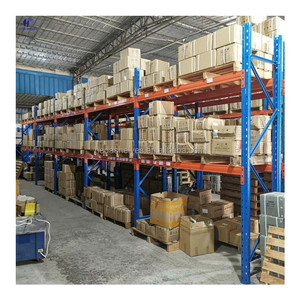
The Berlin-Brandenburg metropolitan region stands as one of Central Europe's most vital logistical corridors. Positioned along major Trans-European Transport Networks (TEN-T) connecting Western Europe to the CEE (Central and Eastern Europe) markets, Berlin has evolved into an intensive hub for e-commerce micro-fulfillment, automotive supply chain assembly (notably anchored by major EV Gigafactories in Freienbrink), pharmaceutical distribution, and third-party logistics (3PL) contract operations. Strategic logistics parks such as GVZ Großbeeren, GVZ Wustermark, GVZ Freienbrink, and urban industrial zones in Spandau and Neukölln demand highly optimized warehouse infrastructure capable of coping with escalating real estate lease rates and stringent regulatory frameworks.
In Berlin's industrial property market, warehouse prime rents have experienced consistent upward pressure. Consequently, warehouse directors, supply chain engineers, and logistics procurement teams are shifting away from traditional floor-stacking and standard wide-aisle configurations toward vertical expansion and high-density material handling architectures. Optimizing cubic volume (cubic meter utilization) rather than square footage has become the primary lever for reducing overhead costs per pallet location.
SEO & Logistics Intent Insight: For warehouse procurement teams in Germany, material handling equipment sourcing is not merely an equipment purchase—it requires strict adherence to European Norms (DIN EN 15512 / EN 15635), DGUV Regulations, and seamless integration with Automated Guided Vehicles (AGVs) and Autonomous Mobile Robots (AMRs).
Exporting industrial material handling equipment and warehouse storage systems into the German market requires strict engineering precision. German warehouse operators are legally bound by accident prevention regulations and safety inspections enforced by the Deutsche Gesetzliche Unfallversicherung (DGUV) and Trade Associations (Berufsgenossenschaften). Direct-from-factory suppliers must ensure structural designs conform to European standards:
Specifies structural design requirements for steel static storage systems and adjustable pallet racking. Our cold-formed steel upright profiles and teardrop/box beams undergo finite element analysis (FEA) to ensure safety factors under full design loads.
Mandates structural safety, impact protection, beam locking pins, load capacity signage (Traglastschilder), and minimum rack aisle safety clearances for powered industrial trucks operating in German warehouses.
Outlines operational guidelines for structural maintenance and regular inspections. Our systems are engineered with modular components for easy replacement of front uprights damaged by forklift operations.
Material handling solutions must be engineered to match the specific operating profile of each industrial sub-zone within the Greater Berlin area. Below are real-world application scenarios demonstrating how specialized racking and automation equipment drive operational performance:
Location Focus: Tempelhof, Neukölln, Berlin-Reinickendorf.
Application Scenario: High-density, fast-turnaround order fulfillment. Utilization of multi-tier boltless rivet shelving combined with Miniload ASRS and conveyor loops. Enables rapid piece picking for quick-commerce and next-day delivery operations within the S-Bahn ring.
Location Focus: East Brandenburg & South Outer Belt.
Application Scenario: EV battery module storage and heavy stampings. Heavy-duty double-deep pallet racks and roll-out sheet metal racks operating with heavy-duty forklifts and overhead cranes, featuring high dynamic payload capacities up to 4,500 kg per beam level.
Location Focus: Regional Fresh & Frozen Distribution Centers.
Application Scenario: Storage at temperatures down to -30°C. Semi-automated Pallet Shuttle systems integrated into hot-dip galvanized racking structures maximize storage density while maintaining airflow essential for energy preservation in cold storage units.
Selecting the optimal material handling system requires evaluating selectivity versus floor space utilization. The table below presents a comparative analysis for warehouse managers designing projects in the Berlin market:
| Racking Architecture | Pallet Access / Selectivity | Floor Space Utilization | Forklift / Automation Requirement | Optimal Berlin Industry Use Case |
|---|---|---|---|---|
| Selective Pallet Racking | 100% Direct Access | 40% - 50% Efficiency | Standard Reach Trucks / VNA | High-SKU 3PL Facilities & Spare Parts |
| Double-Deep Selective Racking | 50% Immediate Access | 60% - 65% Efficiency | Deep-Reach Forklifts / Pantograph | FMCG, Dry Food & Batch Manufacturing |
| Radio Shuttle Pallet System | FILO / FIFO Automated | 80% - 85% Efficiency | Standard Forklift + Automated Shuttle | Cold Storage Facilities (Großbeeren) |
| Push-Back Racking (Cart System) | FILO Lane Access | 70% - 75% Efficiency | Standard Counterbalance Forklift | Buffer Storage & High-Volume Distributors |
| Miniload ASRS System | 100% Automated Pick | 85% - 92% Efficiency | Automatic Stacker Cranes / AMR | Urban Micro-Fulfillment & E-Commerce |
1. Accelerated Transition to Automation (ASRS & AGV Integration): Labor availability constraints in urban Berlin combined with high wage costs are accelerating adoption of fully automated stacker cranes, collaborative robot arms (KINKON cobots), and AGV-compatible rack base plates. Precision manufacturing tolerances (+/- 1.5mm upright verticality) are essential for robotic end-effectors to operate without collision risks.
2. Sustainability & ESG Compliance: German commercial real estate developers increasingly require BREEAM or DGNB (Deutsche Gesellschaft für Nachhaltiges Bauen) green building certifications. We address this by utilizing zero-VOC electrostatic powder coating lines, steel sourced from mills with green energy credits, and fully recyclable steel structural components.
3. Conversion of Legacy Industrial Facilities: Inner-city Berlin revitalization often requires retrofitting historic brick or low-clearance industrial structures. Modular steel frame building structures, mezzanine platforms, and adjustable cantilever racks allow companies to transform brownfield facilities into high-efficiency logistics nodes.
Partnering directly with our production plant gives Berlin warehouse operators, engineering EPC contractors, and procurement distributors a decisive competitive advantage in cost-efficiency, customization, and quality control.
Our facility houses continuous multi-pass automated roll-forming lines producing precision-engineered upright profiles (75mm, 90mm, 100mm, 120mm widths) with consistent wall thickness and high structural strength.
We provide full structural calculations, static analysis, and DWG/BIM model layouts to streamline building permit applications with local Berlin construction authorities (Bauamt).
All component bundles are wrapped, edge-protected, and part-numbered to maximize container cube loading, reducing sea freight costs to Hamburg or Bremerhaven ports and rail transport to Berlin inland terminals.
Direct technical guidance on regulatory compliance, customs, lead times, and engineering specifications.
Work directly with an experienced material handling equipment manufacturer. Contact our engineering team today for free CAD layouts, structural load calculations, and competitive factory-direct pricing tailored for the Berlin market.
Get Catalog


