



Factory-direct warehouse racking & material handling equipment — 20+ years of manufacturing experience for global B2B buyers.
Factory-direct warehouse racking & material handling equipment — 20+ years of manufacturing experience for global B2B buyers.
Explore our certified cold-room pallet racks, steel pallets, and automated high-density storage platforms optimized for sub-zero Norwegian operations.
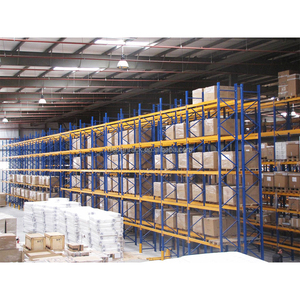
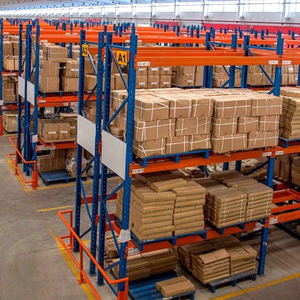
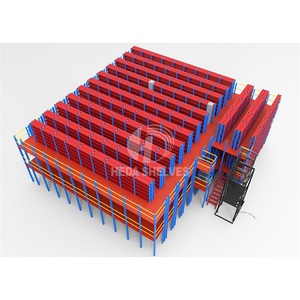
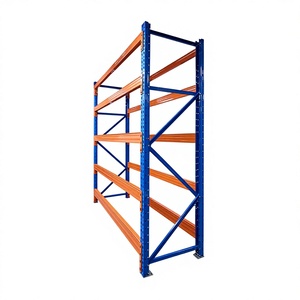
Operating a refrigerated or blast-freezer warehouse in Scandinavia presents extreme operational engineering challenges. In regions like Norway—spanning major seafood hubs such as Bergen, Ålesund, and Tromsø, down to central logistics corridors in Oslo and Viken—cold storage real estate costs are extraordinarily high due to heavy floor insulation, refrigeration power demands, and stringent building safety codes (TEK17 Regulations). Choosing the right heavy-duty pallet racking system is not merely a matter of spatial storage; it is a critical thermodynamic and structural decision.
In sub-zero cold room environments (ranging from -18°C deep freeze to -30°C blast freezing), standard structural steel undergoes a fundamental physical phenomenon known as the Ductile-to-Brittle Transition Temperature (DBTT). Ordinary low-carbon steel profiles can become brittle, leading to micro-cracking and sudden catastrophic structural failure under heavy dynamic forklift impacts. To eliminate this operational hazard, our cold storage racking systems are engineered exclusively using certified high-tensile steel grades such as S355J2+N and Q355D, which guarantee minimum Charpy V-notch impact energy absorption of 27 Joules at temperatures as low as -30°C (compliant with European structural standards EN 10025 and EN 15512).
Furthermore, humidity fluctuations during defrosting cycles create aggressive moisture film deposits. Standard powder coatings can micro-fracture over time under thermal expansion and contraction. We utilize advanced Hot-Dip Galvanizing (HDG compliant with ISO 1461) or specialized low-temperature flexible epoxy-polymer coatings. This ensures impenetrable, self-healing zinc-iron alloy barrier protection against corrosion, rust, and ice condensation buildup in coastal Norwegian marine environments.
A rigorous engineering comparison highlighting why specialized steel selection is non-negotiable for Norwegian cold logistics.
| Engineering Parameter | Standard Ambient Racking | Cold Room Racking (Low Temp) | Arctic Grade Cold Racking (Rack Pricing) |
|---|---|---|---|
| Steel Grade Standard | Q235 / S235JR Structural Steel | Q345B / S355JR Carbon Steel | S355J2+N / Q355D High-Strength Steel |
| Operative Temperature Range | -5°C to +45°C | -15°C to +35°C | -30°C to +50°C (Sub-Zero Blast Certified) |
| Impact Resistance (Charpy V-Notch) | Not Tested at Low Temps | 27J at 0°C | 27 Joules minimum at -20°C / -30°C |
| Surface Protection Coating | Standard Epoxy Powder Coating | Pre-Galvanized Sheet Steel | Hot-Dip Galvanized (ISO 1461) >65-80µm |
| Safety Factor (Design Spec) | 1.45 (Standard FEM 10.2.02) | 1.50 (Standard Storage) | 1.65 (EN 15512 Cold Dynamic Factor) |
| Moisture & Ice Rust Warranty | 1 - 3 Years | 5 Years | 10 - 15 Years Anti-Corrosion Guarantee |
Custom-engineered racking layouts tailored to Norway's seafood exports, retail distribution, and 3PL freezer warehouses.
Ideal for Norway's salmon and cod processing hubs in Ålesund and Tromsø. Automated Radio Shuttle systems achieve over 85% cubic space utilization by eliminating aisles. Shuttle carts transport palleted frozen seafood inside deep channels at -25°C, drastically minimizing cold air escape and electricity costs.
For high-turnover grocery wholesalers in Viken and Gardermoen. Electric mobile racking mounted on floor rails glides laterally to open picking aisles only when requested. This doubles storage capacity within the same insulated cold room footprint, maximizing floor ROI per square meter.
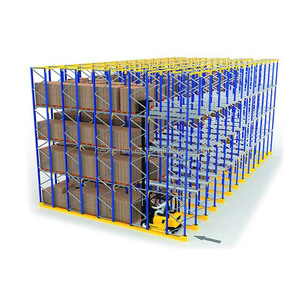
Designed for LIFO/FIFO storage of homogeneous frozen fruit, dairy, and meat products. Heavy-duty guide rails protect structural uprights while forklifts drive directly into racking bays. Fitted with heavy-gauge column guards and floor-anchored safety buffers against forklift strikes.
With over two decades of dedicated manufacturing, we provide complete, risk-free engineering solutions for global cold chain projects.
We operate over 20 continuous roll-forming production lines. Profile punching, beam welding, and post-forming tolerances are tightly managed under ISO 9001 quality assurance to prevent installation misalignment.
Every structural upright, beam profile, and locking pin assembly is mathematically modeled via Finite Element Analysis (FEA) and load tested in strict accordance with European design standard EN 15512.
Our senior rack engineers analyze your building clearance, floor insulation thickness, forklift turning radii, and pallet height data to produce optimized 2D/3D layout proposals within 24 hours.
Components are color-coded, steel-strapped, and wrapped in protective moisture-proof film. Container load sequencing ensures swift, damage-free unloading at major Norwegian ports including Oslo, Drammen, and Bergen.
Expert answers addressing structural safety, building standards, surface finishing, and sub-zero operational logistics.
Steel embrittlement is avoided by selecting micro-alloyed structural steels (such as S355J2+N) that possess high Charpy V-notch impact toughness (minimum 27 Joules at -20°C/-30°C). Standard room-temperature carbon steel becomes brittle at sub-zero levels. Our raw materials undergo strict EN 10204 3.1 mill test certifications to guarantee structural ductility and impact absorption under dynamic forklift loads in frozen environments.
Racking installations in Norway must comply with European Standard NS-EN 15512 (Steel static storage systems - Adjustable pallet racking systems - Principles for structural design) and NS-EN 15635 for operational inspection and maintenance. Additionally, floor anchoring and load calculations take into account Norwegian TEK17 building codes and local seismic/slab thermal insulation constraints.
Cold storage facilities experience intense humidity shifts during maintenance or defrosting cycles, causing ice condensation to form on rack frames. Standard paint or low-grade powder coating can micro-crack due to differential thermal contraction, allowing moisture to penetrate and rust the steel underneath. Hot-Dip Galvanizing (ISO 1461) bonds zinc metallurgically to the steel, providing a 65–80 micron protective layer that resists abrasion, moisture, and sub-zero temperature thermal shock.
Cold room floors typically feature top wearing concrete slabs poured over high-density insulation layers and heating sub-systems (to prevent frost heave). Anchor bolts must be precisely calculated so they secure into the upper concrete slab without puncturing the underlying vapor barrier or insulation membrane. We supply specialized chemical expansion anchors and thermal isolation baseplates to distribute point loads safely.
To prepare an accurate engineering drawing and quotation, please provide: 1) Warehouse internal clear dimensions and height; 2) Operating temperature range; 3) Pallet dimensions (Length x Width x Stacking Height including goods); 4) Maximum pallet weight (Gross Load); 5) Forklift model, maximum lift height, and minimum turning aisle width; 6) Preferred access style (Selective, Drive-In, Shuttle, or Mobile).
Standard manufacturing lead time for custom pallet racking is 14 to 21 days. Transit time via ocean freight to major Norwegian ports—such as Oslo Harbor, Drammen, Bergen, or Ålesund—typically ranges between 28 to 35 days. We provide full customs export documentation, part-numbered container loading lists, and direct door-to-door or port-to-port delivery terms (FOB, CIF, DDP).
Consult with our structural cold-chain engineers to receive a customized 2D/3D CAD layout, structural safety audit, and factory-direct price proposal within 24 hours.