Factory-direct warehouse racking & material handling equipment — 20+ years of manufacturing experience for global B2B buyers.
Factory-direct warehouse racking & material handling equipment — 20+ years of manufacturing experience for global B2B buyers.
As industrial floor space costs across East Coast Australian hubs—including Sydney’s Western Suburbs, Melbourne’s outer West, and Brisbane’s logistics corridors—reach historic highs, logistics managers face an urgent imperative: maximize volumetric warehouse utilization without compromising picking throughput or safety standards under AS 4084:2023. This technical document explores how factory-direct Satellite Pallet Racking (Radio Shuttle Systems) bridges the structural gap between traditional selective racks and fully automated AS/RS configurations.
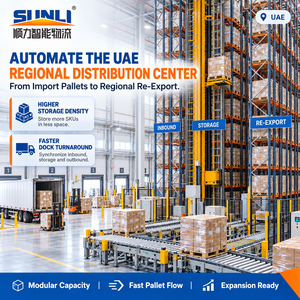
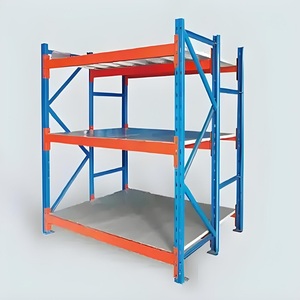
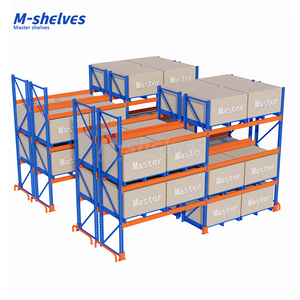
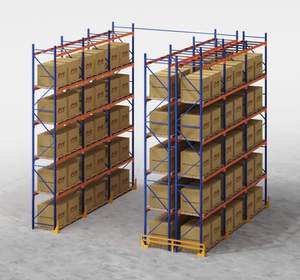
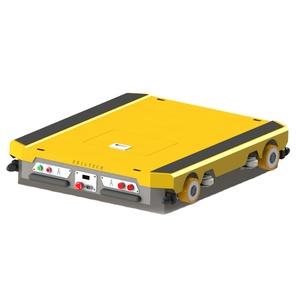
Satellite Pallet Racking—commonly referred to in Australian industrial supply chains as Radio Shuttle Racking—is a deep-lane storage system utilizing a self-powered robotic cart to transport pallets along specialized guide rails deep inside storage channels. By eliminating the need for forklifts to enter the racking aisles (unlike traditional Drive-In systems), Satellite racking dramatically reduces structural impact damage and increases operating cycles by up to 50%.
Our OEM manufacturing facility constructs the structural rack framework using high-tensile Q235B and Q355B structural steel, specifically roll-formed to withstand dynamic braking and acceleration forces exerted by radio-controlled shuttles. Systems engineered for Australian distribution centers undergo rigorous finite element analysis (FEA) to confirm compliance with seismic dynamic load mandates set forth in AS 1170.4 and structural racking specifications of AS 4084:2023.
Equipped with high-performance LiFePO4 (Lithium Iron Phosphate) batteries providing up to 10 hours of continuous operation. Dual-motor drive enables traversal speeds of 1.2 m/s empty and 0.8 m/s fully loaded (1,500 kg capacity).
Precision cold-rolled zinc-galvanized or powder-coated steel rails serving dual functions: supporting the heavy pallet load and guiding the satellite cart wheels with tight dimensional tolerances (+/- 0.5mm).
Multi-directional obstacle sensors, laser positioning reflectors, and anti-collision photoelectric cells prevent channel accidents and automatically detect pallet positioning for tight lane stacking.
Selecting the optimal pallet storage methodology requires balancing volumetric efficiency, capital expenditure (CapEx), labor operational expenditure (OpEx), and picking flexibility. The matrix below outlines how factory-engineered Satellite Racking outpaces conventional storage formats across key operational metrics.
| Performance Metric | Selective Racking | Drive-In Racking | Satellite (Radio Shuttle) Racking |
|---|---|---|---|
| Warehouse Space Utilization | 40% - 50% (High aisle ratio) | 65% - 75% | 85% - 90% (Maximum Density) |
| Pallet Access Method | 100% Direct Access (FIFO) | LIFO Only | FIFO and LIFO Configurable |
| Forklift Damage Risk | Moderate (Aisle collisions) | High (Enters racking structure) | Very Low (Operates at outer face) |
| Labor Throughput Speed | Standard | Slow (Cautious aisle driving) | Fast (Autonomous channel travel) |
| Cold Storage Efficiency | Low (High air volume overhead) | Medium | Optimal (Minimizes refrigerated space) |
| AS 4084:2023 Structural Stress | Baseline | High cumulative frame fatigue | Engineered beam load distribution |
Australian geographical and industrial landscapes present unique supply chain challenges, ranging from extreme temperature fluctuations in regional distribution channels to high humidity and salt spray exposure in coastal port facilities. Our factory supplies customized Satellite Racking tailored to specific regional operational requirements:
Refrigerated industrial facilities in Truganina (Victoria) and Eastern Creek (NSW) leverage our sub-zero satellite shuttles rated down to -30°C. High-density shuttle channels eliminate unnecessary aisle space, cutting refrigeration power consumption per pallet position by up to 40%.
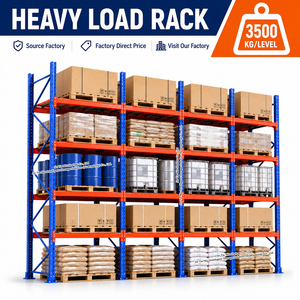
Supporting mining supply centers in Welshpool (Perth) and Mackay (Queensland), our heavy-duty custom shuttle systems accommodate non-standard 1,200mm x 1,200mm Australian oversized pallets and heavy component drums with level load ratings reaching up to 3,500kg.
High-volume wine producers in the Barossa Region and national FMCG 3PL providers utilize FIFO radio shuttle configurations for automated batch rotation, enabling rapid trailer turnarounds and seamless integration with warehouse management systems (WMS).
The Australian industrial real estate and material handling market is undergoing structural shifts driven by macroeconomic and technological drivers. Partnering with a factory-direct exporter allows Australian distributors to capitalize on modern trends:
The updated Australian standard demands stricter testing protocols for racking components, tighter frame deflection limits, and upgraded baseplate anchoring. Modern buyers prioritize suppliers capable of providing certified factory mill test documentation and engineering design verification.
While fully automated crane-based AS/RS solutions require tens of millions in CapEx, semi-automated Satellite Shuttle systems deliver 80% of the volumetric benefits at a fraction of the cost, providing an ROI payback period within 18–24 months for Australian operators.
Australian corporate mandates prioritize environmental responsibility. Our manufacturing plant utilizes recycled steel content and energy-efficient eco-powder coating lines, aligning with green building ratings (NABERS and Green Star) across Australian logistics parks.
With over two decades of dedicated specialization in steel storage manufacturing, our direct export model guarantees Australian buyers transparent pricing, full engineering control, and strict compliance without intermediary markup.
Our facility houses 16 continuous high-precision cold roll-forming lines, robotic welding stations, and an automated continuous electrostatic powder coating line capable of custom RAL color matching and C3/C4 anti-corrosion surface treatments.
Our structural engineering team provides complete 2D floor plans, 3D BIM models, and comprehensive load-capacity calculations optimized for your building clear height, slab thickness, and forklift mast specifications free of charge.
Every shipment bound for Australian ports (Fremantle, Melbourne, Sydney, Brisbane) undergoes pre-assembly verification, weld ultrasonic testing, coating thickness checks (minimum 60-80 microns), and heavy-duty protective ocean bundling.
Our racking systems are specifically engineered to satisfy all structural, stability, and safety guidelines outlined in AS 4084:2023. We utilize high-yield structural steel with verified Mill Test Certificates (EN 10204 3.1) and manufacture uprights with precise hole pitch patterns. Furthermore, we provide local structural engineer sign-off documentation (Form 15/Form 12 compliance assistance) upon project design finalization.
Standard manufacturing lead time at our factory is 15 to 25 days depending on project size and coating requirements. Ocean transit times from our port facilities to major Australian ports typically range between 12 to 18 days for Fremantle (WA), Melbourne (VIC), Sydney (NSW), and Brisbane (QLD). Total door-to-door timeline usually averages 4 to 6 weeks.
Yes. Our shuttle carriages and guide rail systems are custom manufactured to accommodate both standard Australian 1165mm x 1165mm square timber/plastic pallets (Gentrack size) as well as international 1200mm x 1000mm (Euro/ISO) pallets. Multi-pallet size sensors can also be integrated into a single shuttle system.
Each shuttle cart is built with modular plug-and-play electronic components, industrial Siemens PLCs, and premium drive motors. We supply a mandatory Spare Parts Kit with every project—including replacement sensors, wheels, remote controls, and backup battery packs. Technical troubleshooting is provided 24/7 by our automation engineering team via remote diagnosis.
Absolutely. We offer customized RAL powder-coating finishes to match your brand guidelines. For high-humidity, outdoor, or coastal environments exposed to salt spray (such as port facilities in Newcastle or Fremantle), we provide hot-dip galvanized (HDG) rail components and specialized zinc-rich primers for maximum rust resistance.
Our engineering team assists in generating a comprehensive Total Cost of Ownership (TCO) report. By analyzing your current square-meter rental costs, forklift fleet lease expenses, labor hourly rates, and energy usage, we demonstrate how doubling your pallet count in the same footprint usually yields full CapEx recovery within 18 to 24 months.
Get in touch with our senior structural racking engineers for a complimentary CAD floor plan design, AS 4084:2023 compliance consultation, and competitive direct-from-factory quotation.
Contact Us


