Factory-direct warehouse racking & material handling equipment — 20+ years of manufacturing experience for global B2B buyers.
Factory-direct warehouse racking & material handling equipment — 20+ years of manufacturing experience for global B2B buyers.
The Greater Mexico City Metropolitan Area (Zona Metropolitana del Valle de México - ZMVM) represents the industrial heartland and primary logistics engine of Mexico. Accounting for over 20% of the national GDP and serving as the focal distribution hub for central South America, CDMX presents a complex operating environment for logistics directors, plant managers, and structural engineers. Deploying industrial warehouse storage systems in Mexico City requires navigating a unique convergence of severe seismic hazards, extreme urban real estate costs, aggressive nearshoring demand under USMCA (T-MEC), and stringent local building standards (RCDF - Reglamento de Construcciones para el Distrito Federal).
As a premier OEM custom heavy-duty steel pallet rack manufacturer and global exporter, our engineering practice centers on resolving the core spatial and structural friction points that commercial operations encounter across Mexico City’s primary industrial corridors, including Vallejo, Cuautitlán Izcalli, Tepotzotlán, Tultitlán (the CTT triad), Toluca-Lerma, and Iztapalapa near the Central de Abasto (CEDA).
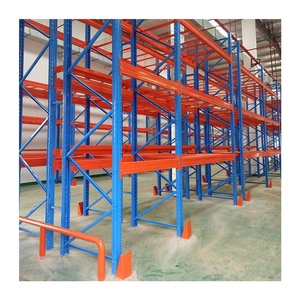
Information Gain Insight: Unlike standard static racking designed for stable geological conditions, industrial steel pallet racks installed in Mexico City must account for soft-soil wave amplification inherent to ancient lakebed deposits (Zona III). Our OEM racking designs utilize Q355B high-ductility structural steel, customized X-bracing geometries, enlarged seismic baseplates, and chemical anchor arrays to prevent structural resonance, beam unlatching, and cataclysmic rack collapse during magnitude 7.0+ seismic events.
Mexico City is geologically divided into three primary geotechnical zones: Hill Zone (Zona I), Transition Zone (Zona II), and Lake Bed Zone (Zona III). The vast majority of logistics nodes in Azcapotzalco (Vallejo), Gustavo A. Madero, and eastern corridors lie directly within Zona III. This zone consists of highly compressible, high-water-content clay layers extending tens of meters deep. During deep-focus subduction earthquakes along the Pacific Coast (such as the Guerrero or Michoacán gaps), low-frequency seismic waves undergo massive amplification as they pass through the soft lakebed sediment.
Standard pallet rack structures designed for rigid ground experience intense amplification when the natural vibration period of the storage rack matches the fundamental period of the CDMX subsoil ($T_s \approx 1.5 - 3.0 \text{ seconds}$). This resonance phenomenon creates immense lateral shear forces, torsional racking distortions, and extreme vertical uplift on baseplates.
We manufacture upright frames using high-yield-strength Q355B cold-rolled structural steel (yield strength $\ge 355 \text{ MPa}$). High ductility allows the frame to absorb dynamic seismic energy through controlled elastic-plastic deformation without brittle fracture.
Engineered with extended surface footprints, multi-hole anchor patterns, and welded stiffener ribs. Baseplates distribute concentrated vertical point loads and resist overturning moments during severe horizontal ground motion.
Beam-to-upright connections feature multi-claw heavy-gauge steel connectors equipped with automatic mechanical safety pins. This prevents beam disengagement during vertical seismic shockwaves and intense frame sway.
Our engineering team performs finite element analysis (FEA) and dynamic response spectrum calculations in alignment with ANSI/RMI MH16.1, FEM 10.2.02, and the seismic design parameters specified by the Mexico City Building Code (RCDF-2023). By incorporating structural back-to-back ties, top-aisle ties, and heavy-duty frame diagonal bracing, we ensure your warehouse infrastructure remains structural safe under peak spectral acceleration ($S_a$) values exceeding $0.4g - 0.6g$.
Mexico City’s industrial geography is highly segregated by industry type, facility age, and logistics objective. Our customized OEM heavy-duty pallet racking solutions are tailor-engineered to match the specific operating demands of each major hub:
Challenge: Aging brownfield facilities, restricted floor footprint, elevated land prices, and low clear-height ceilings in historical urban centers.
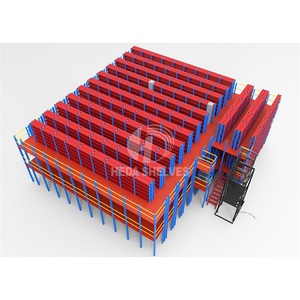
OEM Solution: High-density Multi-Tier Mezzanine Platforms and Selective Pallet Racking with narrow-aisle configurations. Maximizes cubic storage utilization while maintaining 100% SKU selectivity for rapid last-mile e-commerce fulfilment across Central CDMX.
Challenge: Modern, high-bay Class-A distribution centers operating 24/7 high-throughput FMCG, pharmaceutical, and refrigerated inventory.
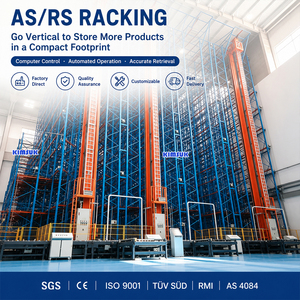
OEM Solution: Automated Storage and Retrieval Systems (AS/RS), High-Density Drive-In/Drive-Thru Racks, and Double-Deep Selective Racking. Features galvanized anti-corrosion surface treatments designed to withstand temperature cycles in deep-freeze environments (-30°C).
Challenge: Heavy, non-standard unit loads, metal stamping dies, engine blocks, and raw steel coils requiring immense load capacity.
OEM Solution: Extra Heavy-Duty Beam Racking (up to 5,000 kg per level capacity), Roll-Out Sheet Metal Racks, and Custom Cantilever Systems designed for crane and heavy forklift integration.
Challenge: Massive daily pallet movements, mixed wooden and plastic pallets, risks of box collapse or loose cargo falling.
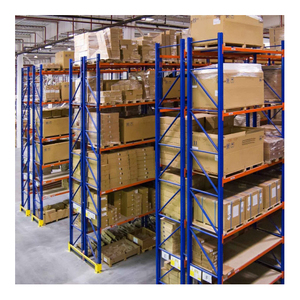
OEM Solution: Selective Pallet Racks equipped with Heavy-Duty Wire Mesh Decking and Column Guards. Prevents individual package drop-through while enhancing overhead fire sprinkler water penetration in compliance with NOM-002-STPS.
The acceleration of Nearshoring has transformed Central Mexico into a primary manufacturing base for North American supply chains. Under the USMCA (T-MEC) trade framework, multinational corporations in automotive, medical devices, electronics, and aerospace are relocating manufacturing lines to Mexico. This structural economic migration has driven warehouse vacancy rates in Greater Mexico City down to historic lows (< 1.5%), creating unprecedented demand for high-bay vertical space optimization.
To support international procurement directors and EPC contractors overseeing expansion projects in CDMX, our OEM manufacturing facilities deliver tailored engineering flexibility:
Selecting the optimal pallet racking configuration requires balancing load weight, storage density, picking speed, and structural investment. The matrix below details technical parameters for systems optimized for CDMX seismic conditions:
| Racking System Type | Max Load / Level | Seismic Resistance Index | Space Utilization | Primary CDMX Application |
|---|---|---|---|---|
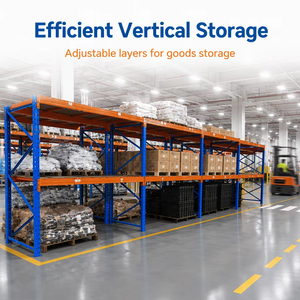
| Selective Pallet Racking | 1,000 - 4,500 kg | High (Flexible Frame Bracing) | 40% - 50% | Vallejo E-Commerce & Multi-SKU 3PL Hubs |
| AS/RS Automated High-Bay | 1,500 - 3,000 kg | Extreme (Rigid Structural Steel) | 85% - 95% | Tepotzotlán Class-A Automated Centers |
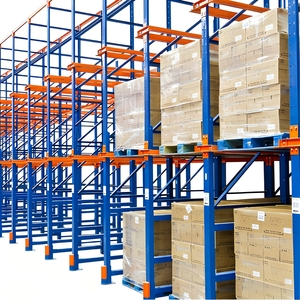
| Drive-In / Drive-Thru System | 1,000 - 2,000 kg | Moderate (Requires Top/Back Ties) | 65% - 75% | Cold Storage & Seasonal Bulk FMCG |
| Multi-Tier Mezzanine Platform | 300 - 1,500 kg/m² | High (Custom Column Grids) | 100% Floor Doubling | Urban Fulfillment Centers in Azcapotzalco |
| Heavy Duty Cantilever Rack | 800 - 3,000 kg/Arm | High (Heavy Base Anchoring) | 60% - 70% | Toluca Industrial Steel, Pipe & Timber Stores |
Procuring warehouse racking directly from our manufacturing facility provides distinct commercial and technical advantages over buying from local intermediary distributors in Mexico:
We do not sell rigid off-the-shelf catalog sizes. Our structural engineering department produces customized 2D CAD floorplans and 3D structural models tailored exactly to your warehouse dimensions, column layouts, floor slab capacities, and forklift aisle requirements—offered as a free technical consultation service.
Shipping structural steel across ocean lanes requires rigorous protection. Uprights, beams, and diagonal braces are bundled with steel strapping, wrapped in heavy-duty protective film, reinforced at contact points with corrugated edge-guards, and clearly tagged with part numbers for streamlined customs inspection at Manzanillo or Veracruz ports.
With over two decades of international storage equipment manufacturing, our factory operates continuous roll-forming production lines, automated robotic welding cells, and stringent quality control protocols aligned with ISO 9001. Every shipment is accompanied by raw material mill test certificates, powder coating thickness reports, and step-by-step installation guidance diagrams.
Partner directly with an experienced OEM steel pallet rack manufacturer. Get a free seismic-compliant CAD warehouse layout design, structural load calculation, and factory-direct price quotation within 24 hours.



