



1. Executive Architectural Analysis: Mechanical Physics of Push Back Racking
In modern supply chain architecture, spatial consolidation and operational throughput stand as the twin pillars of warehouse profitability. As industrial real estate costs expand globally, logistics directors and warehouse structural engineers are forced to re-evaluate conventional storage paradigms. Among high-density storage methodologies, Push Back Pallet Racking Systems represent one of the most mechanically sophisticated, highly dynamic Last-In, First-Out (LIFO) pallet management solutions available today.
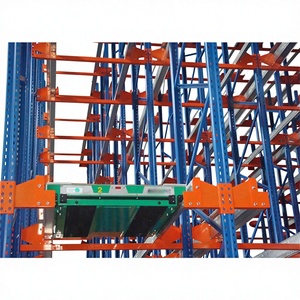
Unlike static selective racking—which requires extensive aisle space for every single pallet row—push back systems utilize nested structural steel carts flowing over inclined structural steel rails. The system operates on kinetic gravitational acceleration and forced mechanical displacement: when a forklift operator deposits a new unit load into a lane, the incoming pallet physically pushes back the previously loaded pallet resting on the top nested cart. Upon retrieval, gravity pulls the remaining carts forward toward the aisle face at a controlled rate of descent.
Gravitational Inclination Physics
Engineered precisely at a 3/8-inch per foot slope (~3% grade gradient) to optimize dynamic kinetic energy without causing velocity drift during pallet flow displacement.
Nested Cart Kinematics
Heavy-duty structural steel telescoping carts nest inside one another. Multi-lane configurations support depth profiles of 2-deep, 3-deep, 4-deep, 5-deep, and up to 6-deep pallet storage.
Aisle Footprint Reduction
Eliminating multiple access aisles yields up to 75% higher pallet density compared to standard selective racking, significantly cutting footprint costs per storage bay.
From a structural load-bearing perspective, push back racking systems require immaculate manufacturing tolerances. Because the carts move along internal inclines using steel bearings and heavy-duty wheels, any thermal warping, frame deflection, or micro-scale profile misalignment can cause cart binding, wheel derailment, or uneven gravity roll speed. Therefore, evaluating trusted push back pallet racking factories requires a deep dive into manufacturing processes, steel metallurgy, roll-forming precision, and FEA (Finite Element Analysis) capabilities.
2. Key Technical Selection Parameters for Tier-1 Racking OEM Factories
Procuring heavy-duty warehouse equipment directly from China or global manufacturing hubs demands rigorous quality control protocols. Procurement managers must evaluate factories not merely on low pricing, but on structural integrity, compliance certifications, steel raw material origin, and automated production capabilities.
A. Steel Metallurgy & Tensile Standard Certifications
The structural backbone of any high-density racking system lies in its raw steel quality. Premier factories utilize high-yield structural steel coils—primarily Q355B (equivalent to S355JR under EN 10025 or ASTM A572 Grade 50) for heavy upright frames and structural push back rails, and Q235B (ASTM A36 equivalent) for light-duty bracing and structural accessories.
| Steel Grade Standard | Yield Strength (MPa) | Tensile Strength (MPa) | Recommended Racking Component |
|---|---|---|---|
| Q355B / S355JR | ≥ 355 MPa | 470 - 630 MPa | Heavy Upright Columns, Heavy Load Beams, Push-Back Inclined Rails |
| Q235B / S235JR | ≥ 235 MPa | 360 - 510 MPa | Horizontal/Diagonal Bracing, Pallet Stop Barriers, Standard Decking |
| ASTM A1011 SS Gr 50 | ≥ 345 MPa | ≥ 450 MPa | Cold-Rolled Teardrop Frames & Custom Punch Profiles |
B. Cold-Roll Forming & Punching Tolerances
Cart-on-rail dynamics require sub-millimeter precision. Leading factories deploy multi-pass automated continuous cold-roll forming lines equipped with CNC rotary punch units. Key manufacturing standards include:
- Upright Pitch Accuracy: Hole punching tolerance held within ±0.1mm along a 12-meter profile to guarantee perfect beam lock-in and zero structural twist.
- Rail Straightness & Camber: Straightness deviations must not exceed 1/1000 of the total length, eliminating cart deceleration zones caused by rail curvature.
- Bearing Axle Concentricity: Carts utilize fully sealed, maintenance-free precision ball bearings with high static load capacity to withstand dynamic impact from forklift placement.
Engineering Insight: Deflection Ratios & Seismic Safety Factors
According to ANSI MH16.1 (RMI) and European EN 15512 structural specifications, structural beam deflection under maximum design load must not exceed L/200 (where L is beam span length). In seismic zones, upright frame calculations must incorporate dynamic response spectra factors (R-Factor), using heavy-duty footplates anchored with chemical expansion bolts to prevent overturning moments during seismic shear events.
3. Product & Technological Evolution Trends in High-Density Push Back Systems
The material handling automation market is undergoing a seismic shift toward hybrid systems that combine traditional mechanical gravity flow with intelligent automated warehouse management technologies. As warehouses move toward Industry 4.0 standards, push back pallet racking systems are evolving along several key technological vectors:
1. Hybrid Push-Back + Shuttle Automation (AMR/AGV Integration)
Traditional push back systems rely entirely on forklift driver pushing force. Emerging factory innovations integrate low-profile Autonomous Mobile Robots (AMRs) or Automated Guided Vehicles (AGVs) equipped with custom push-back hydraulic end-effectors. These autonomous units push pallets along rails with monitored force profiles, preventing accidental pallet shock or uneven cart impact.
2. IoT-Enabled Optical Sensors & Anti-Jam Warning Systems
Modern high-tier push back installations are increasingly retrofitted with embedded optical sensors and micro-switches along the cart track. These wireless sensors communicate directly with Warehouse Execution Systems (WES) to monitor:
- Real-time lane occupancy status (identifying empty vs. filled cart positions).
- Speed profile tracking (detecting sluggish cart returns indicative of bearing debris or frame misalignment).
- Pallet positioning alerts (warning operators if a pallet is resting off-center on a nested cart).
3. Low-Temperature Cold Storage Metallurgical Coatings
With the rapid expansion of frozen food distribution networks, push back racking is widely deployed in sub-zero environments (down to -30°C). Standard carbon steel becomes brittle under extreme cold, while standard lubricants freeze and bind bearings. Next-generation factory solutions utilize:
- Cryogenic-Resistant Steel Grades: Impact testing (Charpy V-Notch) certified to retain ductility at micro-zero temperatures.
- Anti-Freeze Cartridge Bearings: Sealed stainless-steel bearings packed with low-viscosity synthetic low-temperature lubricants.
- Thermally Cured Epoxy-Polyester Powder Coatings: Multi-stage electrostatic surface finishing that resists micro-cracking and moisture condensation corrosion.
4. Future Procurement Trends & Supply Chain TCO Breakdown
When evaluating supplier proposals for large-scale warehouse projects, sophisticated procurement teams look far beyond the initial purchase order price. Total Cost of Ownership (TCO) over a 15-to-20-year system lifecycle includes initial capital expenditure (CapEx), installation labor, routine maintenance, damage repair downtime, and building operational efficiency.
CapEx vs. OpEx Optimization
Push back racking features zero electric motor power requirements, delivering low operational expenditure (OpEx) while maximizing storage density per square foot.
Lower Maintenance & Repair Costs
Unlike complex automated AS/RS systems, push back mechanics rely on gravity and heavy-duty mechanical carts, resulting in dramatically lower failure rates and minimal maintenance downtime.
OEM Direct Sourcing Advantages
Partnering directly with integrated tier-1 China factories eliminates middleman distributor markups, securing fully customized CAD layouts, FEA calculations, and factory-direct pricing.
Direct Factory OEM Sourcing vs. Local Reseller Procurement
Global supply chain logistics managers are increasingly bypassing regional middleman distributors in favor of direct manufacturer partnerships with verified China racking factories. Direct procurement offers clear economic and technical advantages:
- Custom Structural Engineering: Direct access to factory CAD/CAM engineers allows structural customization—such as custom upright frame depths, heavy-duty beam connectors, and specific rack color matching to corporate brand standards (RAL palette).
- Quality Inspection Transparency: Direct factory engagement enables third-party mill inspection (e.g., SGS, TÜV Rheinland, Intertek) during raw material coil slitting, welding, and powder coating stages.
- Container Loading Density Optimization: Tier-1 export factories utilize specialized packing matrices—bundling uprights and nested carts with protective corner guards and plastic wrapping to maximize ocean freight container payload capacity.
5. Enterprise Advantage: Rack Pricing Storage Solutions Co., Ltd.
With more than 20 years of continuous manufacturing experience, Rack Pricing Storage Solutions Co., Ltd. stands as a premier manufacturer and global exporter of high-density warehouse storage racks, heavy-duty industrial shelving, mezzanine platforms, and integrated logistics equipment. Our fully owned manufacturing infrastructure delivers complete end-to-end control over structural design, metal forming, robotic welding, surface treatment, and global export packaging.
| Technical Capability | Rack Pricing Storage Solutions Co., Ltd. Standard | Standard Industry Market Benchmark |
|---|---|---|
| In-House Powder Coating Line | Automated 60-meter continuous powder coating tunnel with multi-stage chemical pretreatment | Outsourced batch manual spraying, inconsistent thickness (<40μm) |
| Coating Thickness & Adhesion | 60 - 90 microns (μm) electrostatic dry powder finish (ISO 2409 Cross-Hatch Class 0) | Variable thickness (30 - 50 microns), vulnerable to chipping and rust |
| Welding Quality Standards | Robotic MIG welding certified under AWS D1.1 / EN ISO 3834 structural standards | Manual spot welding with inconsistent penetration and spatter |
| Engineering Support | Free CAD warehouse floor layout, 3D structural modeling, and FEA load calculation reports | Basic non-engineered rough layout sketches without structural calculation data |
| Safety Compliance | Fully compliant with OSHA 29 CFR 1910, EN 15635, RMI ANSI MH16.1, and AS4084-2012 | Partial self-declarations without third-party physical load testing validation |
Our factory operates strict quality management systems (ISO 9001 certified). Every production run undergoes rigorous batch inspection, including raw steel tensile testing, weld seam ultrasonic flaw detection, coating adhesion salt-spray testing, and full-scale cart load flow simulations. Whether you require standard selective racking, teardrop/Redirack matching frames, custom cantilever arms, or fully engineered 6-deep push back systems, our engineering team ensures your project is delivered on schedule, under budget, and built to withstand decades of intensive operational use.
Ready to Optimize Your Warehouse Storage Density?
Contact our structural engineering team today for a complimentary CAD floor plan layout, static load calculation report, and factory-direct direct quotation.
Send an Inquiry6. Frequently Asked Questions (Technical & Procurement FAQ)
What warehouse floor building data is required to design a push back racking layout?
1. Building dimensions including total floor plan length, width, clear height under roof trusses, and column grid spacing.
2. Concrete floor slab details including slab thickness, concrete compressive strength (e.g., 3000 PSI / C25/30), and rebar reinforcement specifications.
3. Pallet specifications: exact length, width, height, bottom board orientation (2-way vs. 4-way entry), and maximum/minimum weight per loaded pallet.
4. Forklift specifications: maximum lift height, collapsed mast height, turning radius, and forklift type (reach truck, counterbalanced, or narrow aisle truck).
How does a push back system prevent cart binding or pallet jams during operation?
1. Precision Cart Guidance: Outer nested carts feature low-friction steel guide wheels running inside heavy-duty rolled steel channels, preventing sideways twist or cross-wedging.
2. Debris Shields & Clean Rails: Carts are engineered with integrated wheel wipers that clear minor wood chips or packaging debris from the rail track during normal cart motion.
3. Slope Engineering: The 3/8-inch per foot slope (~3% angle) provides sufficient gravitational force to overcome static friction while keeping pallet acceleration at a safe, controlled speed.
Can push back racking systems match existing regional styles like Teardrop or Redirack?
What surface finishes are available for high-humidity or cold storage installations?
• Electrostatic Powder Coating: Our standard 60-90 micron epoxy-polyester powder coat, cured at 200°C, available in standard or custom RAL colors for normal climate-controlled warehouses.
• Pre-Galvanized Steel: High-durability zinc-coated steel coils used for internal cart structural frames, wire mesh decking, and slotted angle components.
• Hot-Dip Galvanizing (HDG): Immersion in molten zinc (BS EN ISO 1461 compliant) providing a 65-85 micron thick protective alloy layer, ideal for outdoor racks, chemical plants, or high-humidity cold storage facilities.
How are large push back rack orders packaged and packed for export container shipping?
What international safety codes and load standards do your factory products fulfill?
• ANSI MH16.1: RMI (Rack Manufacturers Institute) Specification for the Design, Testing and Utilization of Industrial Steel Storage Racks (USA).
• EN 15512 & EN 15635: European standards for adjustable pallet racking systems structural design, tolerances, and operational safety maintenance.
• AS4084-2012: Australian standard for steel storage racking.
• OSHA 29 CFR 1910.178: General Industry safety standards for material handling and rack protection compliance.