Factory-direct warehouse racking & material handling equipment — 20+ years of manufacturing experience for global B2B buyers.
Factory-direct warehouse racking & material handling equipment — 20+ years of manufacturing experience for global B2B buyers.
Explore our core engineering catalog designed for international logistics hubs, cold storage facilities, and high-density manufacturing warehouses.
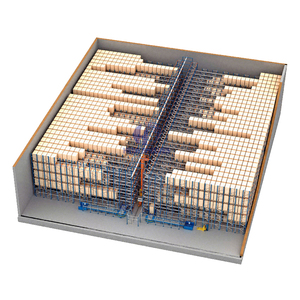
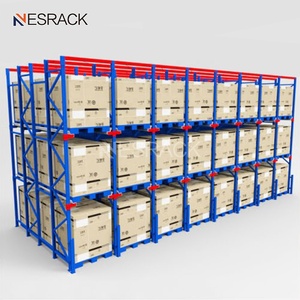
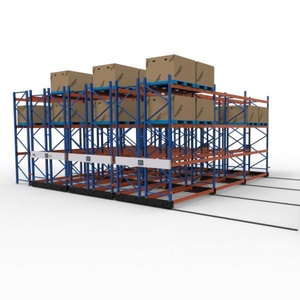
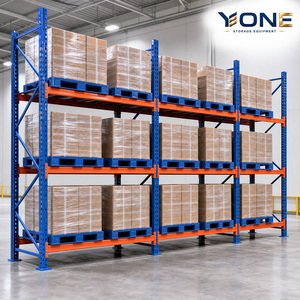
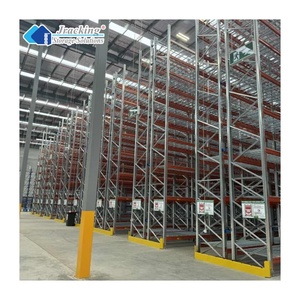
Our four-way shuttle solutions deliver measurable spatial and operational improvements validated across global 3PL networks and automated facilities.
The Four-Way Shuttle Racking System represents a monumental leap in automated high-density warehouse storage technology. Unlike traditional two-way radio shuttles that operate strictly along linear depth tracks, the 4-way shuttle robot possesses full 3D spatial mobility. By dynamically switching between longitudinal storage tracks and transverse transfer aisles via an integrated hydraulic or electromechanical wheel-raising mechanism, a single shuttle unit can access any pallet location on a designated racking level without manual forklift intervention.
As a leading 4-way shuttle racking factory and supplier, our engineering framework integrates structural cold-rolled steel profiling (utilizing premium Grade Q355B steel), high-precision guide rails, intelligent vertical elevators (hoists), and a centralized Warehouse Control System (WCS) seamlessly interfaced with your enterprise WMS (Warehouse Management System).
To withstand dynamic kinetic forces, high acceleration loads, and continuous multi-shift operations, our system relies on rigorous structural engineering compliance standardizations:
Powered by ultra-safe Lithium Iron Phosphate (LiFePO4) battery packs with fast optical charging stations, carrying up to 1,500 kg payload capacity at speeds up to 1.5 m/s.
Proprietary cold-formed track profiles engineered with tight deflection tolerances to ensure zero mechanical friction, optimal track alignment, and minimal wheel wear over millions of cycles.
Elevator hoist modules featuring vector-frequency drives lift shuttles or fully loaded pallets between storage tiers with high operational safety and positioning accuracy.
Evaluating total cost of ownership (TCO), space efficiency, and scalability across modern warehouse automation technologies.
| Storage System Type | Volumetric Utility | Throughput Capacity | Cold Storage Efficiency | System Scalability | TCO & Payback Period |
|---|---|---|---|---|---|
| 4-Way Shuttle System | Ultra-High (85% - 90%) | High (Flexible Fleet) | Maximum Efficiency | Modular (Add Vehicles) | Optimal (18 - 24 Months) |
| 2-Way Radio Shuttle | High (70% - 80%) | Moderate (Forklift Dependent) | Good | Limited by Forklifts | Moderate |
| AS/RS Crane System | Very High (80% - 85%) | Fixed High Per Aisle | High Capital Cost | Rigid (Fixed Structure) | Extended (36+ Months) |
| Selective Pallet Rack | Low (35% - 40%) | Selective Access | Low (High Air Space Volume) | Manual Expansion | Baseline Low Initial Cost |
| Drive-In Heavy Duty Rack | Moderate (60% - 65%) | Low (Slow Forklift Access) | Poor Risk Profile | Non-Scalable | Low Initial / High Maintenance |
Procurement directors and supply chain engineers evaluating multi-million dollar logistics infrastructure must design for long-term technological adaptability. The rapid evolution of AI-assisted swarm robotics and IoT monitoring is redefining the procurement landscape for warehouse automated storage and retrieval systems (ASRS).
Next-generation 4-way shuttle fleets rely on distributed swarm robotics algorithms rather than rigid single-path logic. Shuttle vehicles autonomously calculate optimal transit vectors, dynamically re-route around localized bottlenecks, and auto-balance workload queues across matrix tracks.
With global cold chain logistics expanding rapidly in pharmaceutical and food distribution sectors, procurement trends show a massive surge in sub-zero certified shuttle hardware. Specialized low-temperature battery chemistries, thermal-compensated structural steel joints, and anti-condensation IP65 sensors are mandatory baseline specifications.
Modern automated layout design is eliminating manual forklift interface zones entirely. Automated Guided Vehicles (AGVs) and Autonomous Mobile Robots (AMRs) transfer pallets from inbound container ramps directly onto vertical shuttle hoists, executing zero-touch logistics execution from dock to rack storage.
Smart 4-way shuttle vehicles now incorporate supercapacitor power buffers and braking energy recuperation technology. As energy tariffs fluctuate, energy-efficient shuttle matrix designs significantly lower operating overhead while qualifying projects for international carbon reduction accreditations.
Over two decades of precision manufacturing, strict compliance with structural standards, and end-to-end quality control under one roof.
We operate fully automated roll-forming production lines, robotic welding stations, and an integrated electrostatic powder coating plant. Direct factory control guarantees structural consistency, raw steel traceability, and tight dimensional tolerances across every project shipment.
Our racking systems, structural steel profiles, and shuttle interfaces are engineered in full alignment with international safety frameworks including AU Standard AS4084-2012, European EN 15635, and US OSHA 29 CFR 1910 design guidelines.
From initial DWG/CAD site layout rendering and Finite Element Method (FEM) load stress analysis to export ocean packaging, custom labeling, and remote on-site installation guidance, our engineering group handles every phase seamlessly.
Comprehensive technical and commercial responses to common inquiries submitted by project engineers and supply chain buyers.
Consult directly with our senior racking design engineers. We provide free DWG design layouts, system capacity simulation, and factory-direct price estimates tailored to your project requirements.