Factory-direct warehouse racking & material handling equipment — 20+ years of manufacturing experience for global B2B buyers.
Factory-direct warehouse racking & material handling equipment — 20+ years of manufacturing experience for global B2B buyers.
Engineered for maximum volumetric efficiency, high unit-load capacities, and rigorous seismic resilience.
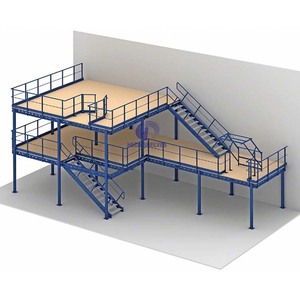
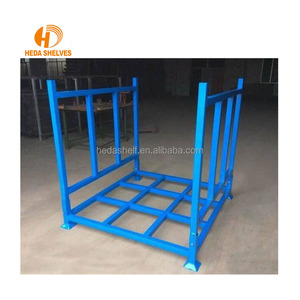
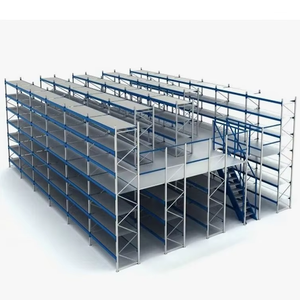
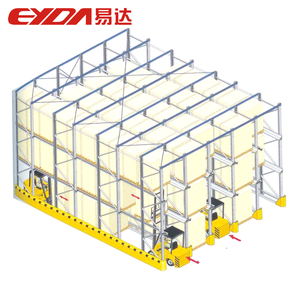
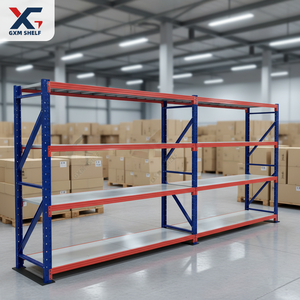
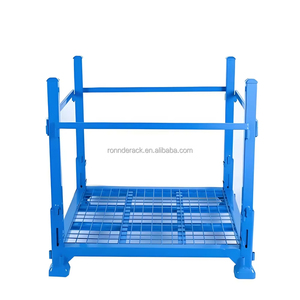
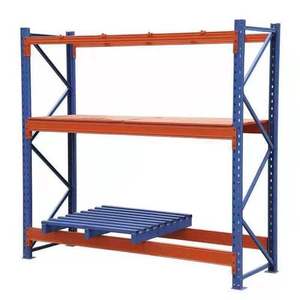
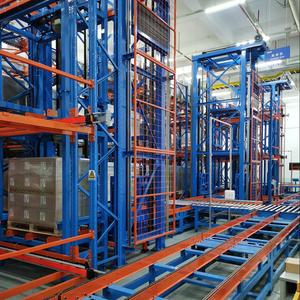
In modern high-density fulfillment centers and raw material processing plants, bulk material pallet racking serves as the backbone of modern intra-logistics. Managing high-unit-weight payloads—ranging from 1,000 kg to over 3,000 kg per pallet position—demands more than standard off-the-shelf shelving. It requires precise cold-formed structural steel engineering, rigid beam-to-column locking mechanisms, and finite element stress analysis (FEA) to withstand static, dynamic, and seismic forces.
China's industrial manufacturing ecosystem has emerged as the global epicenter for structural racking fabrication. Utilizing high-tensile Q235B and Q355B cold-rolled structural steel, leading Chinese manufacturers produce systems compliant with international structural frameworks, including ANSI/RMI MH16.1, European standard EN 15512, and FEM 10.2.02. Evaluating a bulk material racking supplier requires looking beyond raw steel tonnage; procurement directors must assess structural cross-sectional profiles, beam deflection thresholds ($L/200$), connection ductility, and surface passivations to ensure multi-decade operational safety.
Engineering Gain Note: Structural rack failure rarely originates from upright metal fracture; over 82% of structural collapses result from beam-to-upright connection fatigue under eccentric loading, inadequate baseplate anchoring under seismic shear, or frame twist caused by unrated forklift impacts. Our integrated systems employ 5-hook cold-stamped beam connectors and safety-locking pins rated to withstand vertical dislodgement forces exceeding 1,000 kg per connection point.
Selecting the appropriate steel grade directly influences the structural dead weight, floor slab load distribution, and capital outlay of warehouse projects. Below is a comparative engineering baseline for bulk storage rack configuration:
| Engineering Property | Q235B Cold-Rolled Steel | Q355B High-Yield Alloy Steel | Impact on Racking Architecture |
|---|---|---|---|
| Yield Strength ($\sigma_y$) | $\ge 235\text{ MPa}$ | $\ge 355\text{ MPa}$ | Q355B offers +51% higher resistance to permanent deformation under heavy load. |
| Tensile Strength ($\sigma_u$) | $370 - 500\text{ MPa}$ | $470 - 630\text{ MPa}$ | Higher ultimate strength allows thinner profile walls while retaining safety factors. |
| Optimal Application | Standard selective racking, medium-span platforms | Heavy drive-in racking, high-bay ASRS, seismic zones | Optimizes steel weight per pallet position without compromising structural capacity. |
| Profile Flexibility | High cold-forming ductility | Enhanced structural rigidity | Q235B is ideal for intricate multi-drop teardrop punching patterns. |
| Deflection Limit Compliance | $L/200$ up to $1,500\text{ kg/level}$ | $L/200$ up to $3,500+\text{ kg/level}$ | Q355B maintains straightness over 3,900 mm clear beam spans under heavy loads. |
Combining two decades of material handling manufacturing experience with full in-house control over steel forming, welding, and surface treatment.
Operates 18 automated continuous roll-forming lines capable of shaping upright profiles up to 120mm width and 3.0mm thickness with 50mm and 75mm pitch precision.
Features an fully automated 220-meter electrostatic powder coating tunnel with 9-stage pre-treatment wash (degreasing, phosphating, pure water rinse) ensuring 80+ micron paint thickness.
Produces exact replacement profiles for established global designs including Canadian Redirack teardrop hooks, European box-beam profiles, and standard Dexion-style shapes.
Every major project undergoes structural FEA simulation to verify live loading, wind shear (outdoor installations), and seismic acceleration compliance before manufacturing begins.
Layout designs and safety components follow global guidelines including EN 15635 for inspection compliance and OSHA 29 CFR 1910 for industrial storage safety.
Custom packaging designs utilize nested bundle strapping, corner protective sleeves, and container loading maps to maximize cubic meter usage and eliminate transit chafing.
The industrial storage industry is undergoing a structural shift driven by automated material handling, cold-chain expansion, carbon footprint regulations, and warehouse management system (WMS) integration. B2B procurement managers planning long-term infrastructure must align their racking specifications with the following macro trends:
As labor costs rise globally, warehouse projects are shifting toward Automated Storage and Retrieval Systems (ASRS) and Four-Way Radio Shuttle Racking. These systems require tighter manufacturing tolerances ($\pm 1.0\text{ mm}$ beam straightness across 3000mm span) and integrated sensor rails. Modern Chinese factories are upgrading to robotic laser welding to guarantee the alignment required by automated crane shuttles.
Global demand for refrigerated bio-pharmaceuticals and frozen foods is driving high-density racking installations inside $-25^\circ\text{C}$ to $-40^\circ\text{C}$ cold storage facilities. Cold temperatures increase steel brittle fracture risk. Procurement specs are moving toward low-temperature impact tested steel grades (e.g., Q355D/E) combined with specialized powder formulations that maintain flexibility without micro-cracking.
European and North American buyers are increasingly enforcing Scope 3 emissions reporting under CBAM regulations. Racking manufacturers are adopting zero-VOC thermosetting powder coatings, closed-loop water treatment systems, and recycled scrap-based electric arc furnace (EAF) steel coils to cut the carbon footprint per pallet position by up to 35%.
Clear, engineering-backed answers addressing loading calculations, international standards, and custom manufacturing.
Get a complimentary 2D/3D CAD warehouse layout design, structural load calculation, and factory-direct price quotation tailored to your operational floor plan.
Inquire Now


