Factory-direct warehouse racking & material handling equipment — 20+ years of manufacturing experience for global B2B buyers.
Factory-direct warehouse racking & material handling equipment — 20+ years of manufacturing experience for global B2B buyers.
Engineered for maximal vertical cube utilization, high load capacities, and structural compliance across international industrial sectors.
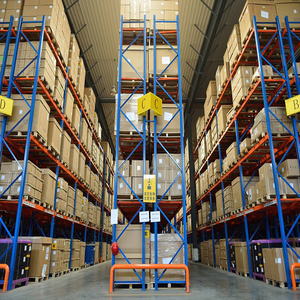
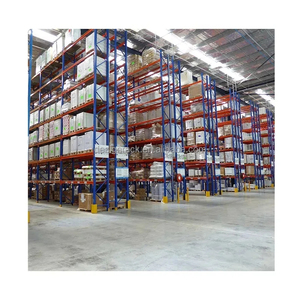
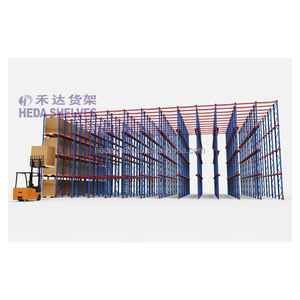
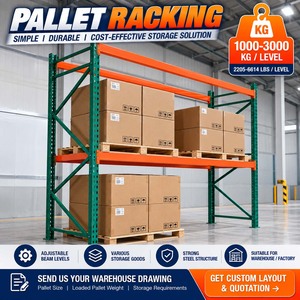
Eliminating structural vulnerabilities, lead-time uncertainties, and surface oxidation through fully integrated cold-roll forming, automated welding, and in-house electrostatic finishing.
From raw Q235B/Q355B coil steel slitting to robotic beam-to-upright welding, every component undergoes strict load-deflection verification according to ANSI/RMA MH16.1 specifications.
Our structural engineering team transforms complex architectural floorplans, forklift turning radii, and clear heights into high-density 2D/3D catwalk layout models within 24 hours.
Operates an automated 9-stage pre-treatment, degreasing, and phosphating wash line before applying thermosetting epoxy powder for superior impact, scratch, and chemical resistance.
We manufacture precise match profile connections for Teardrop, Redirack, Dexion, Speedlock, and Superlock setups, permitting continuous expansion of existing operational hubs.
Every upright frame, step beam, and catwalk decking panel is custom-bundled with plastic protective wrap and corner guards, maximizing container footprint to lower oceanic freight costs.
With continuous steel coil inventory and dual roll-forming lines, standard and custom pallet racking orders are engineered, manufactured, and staged for export in under 20 business days.
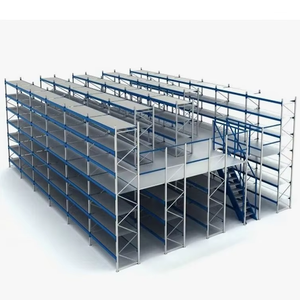
In modern warehousing, volumetric space optimization has evolved beyond standard single-tier selective racking. Pallet Racking with Catwalk Systems (often categorized as rack-supported multi-tier platforms or high-bay mezzanine walkways) convert idle vertical space above pallet bays into fully accessible, manual pick levels. Unlike traditional structural steel mezzanines that require heavy I-beams and extensive floor anchoring, a catwalk-integrated racking design utilizes heavy-duty upright frames and beam matrix structures to directly support the walkways, stairs, and handrail systems.
Information Gain Insight: Integrating a catwalk walkway onto pallet rack uprights increases total cubic storage efficiency by up to 300% compared to standard single-floor layouts, eliminating building expansion capital expenditures while maintaining a minimum floor load rating of 300 kg/m² to over 1,000 kg/m² on walk levels.
Selecting the proper vertical industrial storage topology requires evaluating structural dead load, live load thresholds, forklift access profiles, and capital outlay. The data below outlines key metrics for industrial buyers:
| System Topology | Vertical Space Usage | Live Load Capacity | Forklift Access Requirement | Ideal Operational Profile |
|---|---|---|---|---|
| Selective Pallet Racking | 30% - 40% | 1,000 - 3,000 kg / Level | Reach Trucks / Counterbalance | High SKU count, fast pallet movement |
| Drive-In Racking System | 65% - 75% | 1,000 - 1,500 kg / Pallet | Standard Counterbalance | Homogeneous goods, LIFO inventory |
| Catwalk-Supported Rack System | 80% - 90% | 300 - 800 kg / m² (Walkway) | Order Pickers / Hand Pallet Trucks | Multi-level manual picking + pallet storage |
| Structural Steel Mezzanine | 70% - 85% | 500 - 1,500 kg / m² (Floor) | Varies by lower floor clearance | Open bulk storage, office/assembly space |
Global supply chains face intensifying real estate cost pressures, urban land scarcity, and strict carbon-reduction mandates. As procurement directors evaluate suppliers and exporters for 2026 and beyond, key macro trends are shaping contract awards and design specs:
Catwalk racking systems are no longer designed solely for human order pickers. Advanced exporters are now engineering walkways with ultra-flat, low-vibration steel grating or composite decking capable of supporting Autonomous Mobile Robots (AMRs) and Automated Guided Vehicles (AGVs). These light-payload pick robots traverse catwalk levels to transfer items directly to vertical reciprocating conveyors (VRCs), creating a multi-tier automated picking ecosystem.
International regulatory frameworks, such as the EU Corporate Sustainability Due Diligence Directive (CSDDD) and US Buy Clean initiatives, require supply chain buyers to trace carbon footprints. Leading China manufacturers like Rack Pricing Storage Solutions leverage high-yield, cold-rolled steel coils processed in zero-emission electric arc furnaces (EAF) and apply VOC-free TGIC powder coatings, giving importers verifiable Environmental Product Declarations (EPDs).
Rising global field installation labor rates have rendered traditional welded mezzanine structures economically unviable. Modern procurement strategies prioritize fully bolted catwalk assemblies featuring precision tear-drop or beam-connector keyholes, pre-punched floor decking, and snap-lock safety handrails that lower on-site erection time by over 40%.
Manufacturing technology for pallet racking and catwalk platforms is evolving rapidly to deliver higher strength-to-weight ratios and enhanced operator safety. Key technical developments include:
Shifting from traditional Q235 steel to micro-alloyed Q355B and Q460 cold-formed profiles allows manufacturers to reduce profile wall thickness while increasing flexural yield capacity, resulting in lower shipping weights and higher seismic resistance.
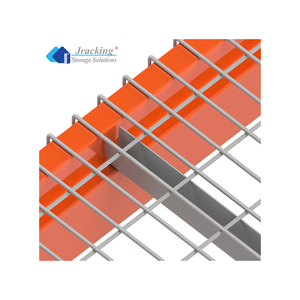
To comply with NFPA 13 in-rack fire sprinkler requirements, catwalk flooring is transitioning from solid plates to heavy-duty wire mesh decking and open-grid steel planks engineered for over 50% open area sprinkler penetration.
Next-generation catwalk systems incorporate integrated strain gauges and impact sensors along baseplates and beam connectors, alerting facility managers to forklift impacts or excessive structural deflection in real time.
Clear, engineering-backed answers addressing structural design, international code compliance, and export logistics.
Consult with our senior structural engineers today. Receive a free 2D/3D CAD warehouse layout proposal and competitive factory-direct pricing within 24 hours.
Get a Quote


