



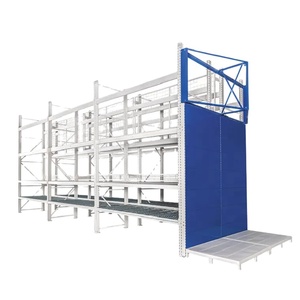
Factory-direct warehouse racking & material handling equipment — 20+ years of manufacturing experience for global B2B buyers.
Factory-direct warehouse racking & material handling equipment — 20+ years of manufacturing experience for global B2B buyers.
Explore our top-engineered industrial rack systems designed for multi-pallet position density, extreme cold-room durability, high-bay automated retrieval, and customized warehouse operational workflows.
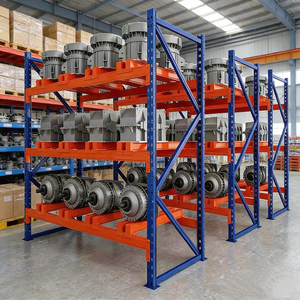
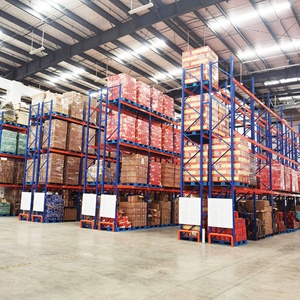
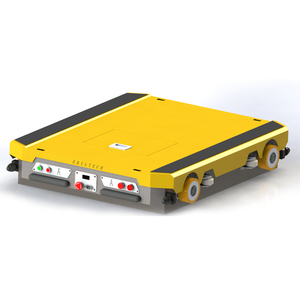
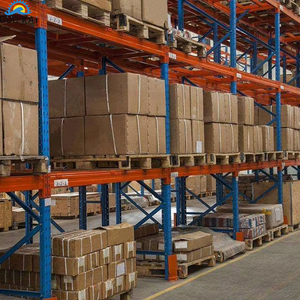
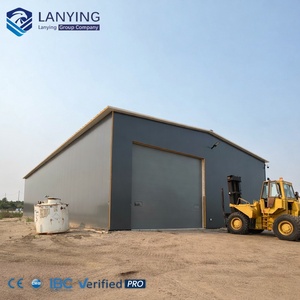
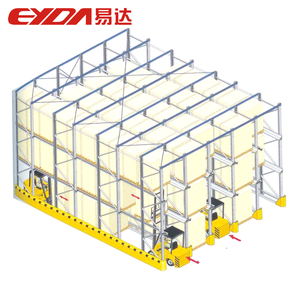
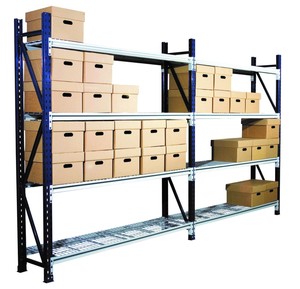
Overcoming modern supply chain hurdles requires more than standard steel frames. We deliver structurally certified, custom-engineered multi-pallet racking systems that optimize floor space and enforce operational safety.
We control the entire supply chain—from high-grade Q235B/Q355B coil slitting and automated cold-roll profile punching to robotized welding and electrostatic thermosetting powder coating lines.
Our structural engineering group models custom pallet position density based on your clear height, slab load limitations, seismic zone requirements, and specific forklift turning radii.
Engineered in strict accordance with EN 15635, FEM 10.2.02, ANSI MH16.1, and OSHA 29 CFR 1910 standards. Every batch undergoes rigorous yield strength and beam deflection (L/200) testing.
Seamlessly expand existing logistics infrastructure. We supply 100% interchangeable North American Teardrop and Canadian Redirack profiles, ensuring effortless component replacement.
Maximized container utilization reduces ocean freight overhead per pallet position. Uprights and box beams are wrapped in heavy-duty protective film, bundle-tagged, and palletized for safe unloading.
Equipped with automatic safety beam lock pins, heavy-gauge wire mesh decking, structural column protectors, frame spacers, and heavy-duty floor anchor bolts for maximum operational resilience.
In modern industrial logistics, selecting a reliable multi pallet position racking exporter requires evaluating structural dynamic capacities, steel metallurgy, precision tolerances, and long-term durability. Multi-pallet position systems—such as Double-Deep Selective Racking, Drive-In/Drive-Thru Systems, Push-Back Racks, and Automated Radio Shuttle Racks—are engineered to eliminate redundant aisle space, doubling volumetric storage density compared to single-deep configurations.
When procurement directors evaluate high-density racking manufacturers, the following structural parameters define the boundary between substandard steel structures and high-performance industrial assets:
| Racking System Type | Pallet Density Ratio | Selectivity (SKU Access) | Handling Equipment | Ideal Application Profile |
|---|---|---|---|---|
| Selective Pallet Rack (1-Deep) | Baseline (100%) | 100% Direct Access | Standard Counterbalance / Reach | High SKU variety, fast turnover, general 3PL |
| Double-Deep Selective | +30% to +40% Density | 50% Direct Access | Deep-Reach Pantograph Forklift | High volume per SKU, cold storage, FMCG |
| Drive-In / Drive-Thru | +60% to +75% Density | LIFO / FIFO (Batch) | Standard Reach Truck (Narrow Frame) | Seasonal goods, bulk homogenous stock |
| Radio Shuttle System | +80% to +85% Density | Automated LIFO / FIFO | Automated Shuttle + Any Forklift | Cold storage, food processing, automated distribution |
| Electrical Mobile Racking | +90% to +100% Density | 100% Direct Access (Movable) | Standard Forklift Truck | Ultra-high density cold rooms, high real estate cost |
As detailed in the benchmark table above, selecting the appropriate multi-pallet position racking strategy is directly tied to your facility's operational throughput, forklift fleet specs, and SKU depth. Partnering with a top-tier Chinese racking manufacturer ensures that engineering drawings, FEA structural stress reports, and component tolerances strictly match your layout footprint.
Stay ahead of global logistics transformations. Procurement managers must adapt to evolving automation integration, environmental mandates, and dynamic supply chain resilience.
Traditional hand-operated racking is rapidly transitioning to AMR (Autonomous Mobile Robot) and Radio Shuttle compatible frameworks. Future-proof racking procurement requires strict beam manufacturing tolerances (±1.0mm) to support automated optical sensors and robotic guided arms.
Global ESG compliance demands non-toxic, Zero-VOC thermosetting powder coatings and scrap-minimized cold-roll forming processes. Overseas buyers prioritize manufacturers utilizing energy-efficient curing ovens and recycled steel coil programs.
Integration of IoT strain gauges and RFID tags directly onto load-bearing beam connectors and upright bases allows real-time detection of forklift impact damage and overload stress, mitigating catastrophic collapse risks under EN 15635 guidelines.
FMCG and e-commerce fluctuations require adaptable storage layouts. Buyers favor boltless, modular racking systems that can be swiftly reconfigured from standard selective racking to mezzanine platforms or drive-in channels with zero structural modification.
The manufacturing architecture of heavy-duty industrial storage racks has undergone a paradigm shift over the past decade. Advanced roll-forming lines now employ continuous computerized punching and high-precision laser trimming, allowing structural engineers to engineer custom hole patterns that optimize frame strength while reducing dead weight.
Clear, authoritative technical answers to common queries raised by international procurement managers, project engineers, and warehouse logistics operators.
Consult with our senior structural engineers to receive a complimentary warehouse CAD design, FEA structural stress evaluation, and factory-direct price estimate tailored to your project.
Send an Inquiry