Factory-direct warehouse racking & material handling equipment — 20+ years of manufacturing experience for global B2B buyers.
Factory-direct warehouse racking & material handling equipment — 20+ years of manufacturing experience for global B2B buyers.
Heavy-duty, seismic-resistant warehouse storage configurations optimized for counterbalance lift truck operation and high-density pallet management.
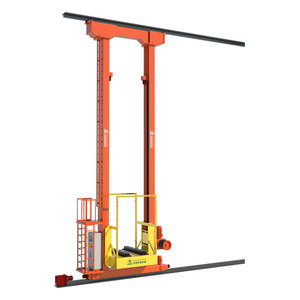
Understanding structural dynamics, right-angle stacking aisle requirements, impact protection design, and beam deflection limits in heavy-duty distribution centers.
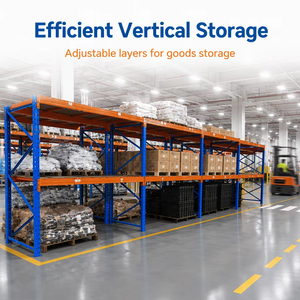
Counterbalance forklifts remain the workhorse of industrial logistics worldwide. Unlike reach trucks or VNA (Very Narrow Aisle) equipment, counterbalance trucks rely on heavy rear counterweights to offset the load carried on the front forks. Because these vehicles lack outriggers or straddle legs beneath the forks, they require wider operational aisles—typically ranging from 3.5 meters to 4.2 meters (11.5 ft to 13.8 ft) depending on mast size, load length, and turning radius.
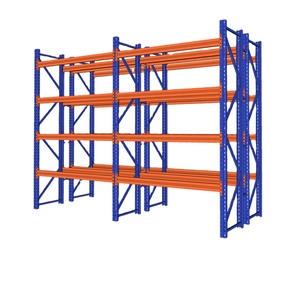
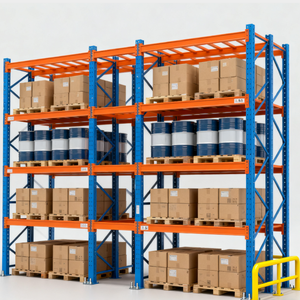
When selecting a counterbalance forklift racking supplier, warehouse engineers must evaluate how the chosen structural steel profiles withstand recurring operational factors. Standard selective pallet racking is the most frequent match for counterbalance trucks due to direct 100% SKU accessibility, rapid pallet loading speeds, and adaptability to uneven floor conditions.
Key Technical Rule: Right-Angle Stacking Aisle (AST) Calculation Formula
AST = WA + x + b + a (Where WA is the turning radius, x is the front axle center to fork face distance, b is nominal pallet length, and a is minimum 200mm safety clearance buffer).
Selecting the optimal storage framework requires balancing space utilization, throughput speed, and capital equipment expenditures. Below is an engineering evaluation comparing common industrial rack structures designed for counterbalance forklift access.
| Racking Architecture | Aisle Width Required (AST) | Direct SKU Accessibility | Forklift Impact Risk Level | Primary Industry Application |
|---|---|---|---|---|
| Heavy-Duty Selective Racking | 3.5m – 4.0m | 100% (Direct Access) | Moderate (Wide Aisles) | 3PL Warehouses, FMCG, Manufacturing |
| Drive-In / Drive-Thru Racking | 3.5m (Entry Portal) | 20% – 30% (LIFO/FIFO) | High (Forklift Enters Frame) | Cold Storage, Bulk Homogeneous Goods |
| Push-Back Racking (Nested Carts) | 3.6m – 4.1m | 50% (LIFO per Lane) | Low-Moderate (Front Face Only) | High-Density Medium SKU Turnover |
| Radio Shuttle Automation Racking | 3.2m – 3.8m | System Dependent (FIFO/LIFO) | Very Low (Shuttle Handles Aisles) | Beverage Distribution, High-Volume Logistics |
| Double-Deep Selective Racking | 3.8m – 4.2m (Pantaspec Fork) | 50% Immediate Access | Moderate-High (Extended Reach) | Buffer Storage, Dry Goods Wholesale |
Because counterbalance forklifts move at higher speeds within 3.5m+ aisles, the risk of accidental frame impact at lower beam levels is substantially higher than in guided VNA aisles. Leading enterprise racking suppliers implement three structural safety measures:
How global procurement directors evaluate and short-list tier-1 structural storage racking manufacturers.
Verified structural steel origin (e.g., Q235B, Q355B or ASTM A1011 Grade 50) with mill test certificates guaranteeing tensile yield limits under heavy dynamic loading.
Engineering compliance with ANSI MH16.1 (RMI standard in North America), EN 15512, and EN 15635 European safety code inspection protocols.
Precision-punched, 3-to-4 claw beam connectors fitted with automatic safety locking pins that resist accidental vertical dislodgement during forklift lifting.
Electrostatic thermosetting epoxy powder coating lines providing 60–80 micron finish thickness, salt spray corrosion test verification, and custom RAL color coding.
Dedicated structural engineering team capable of generating 2D CAD layouts, 3D BIM models, and Finite Element Analysis (FEA) dynamic strain simulations.
Manufacturing versatility to mirror teardrop patterns (North American standard) or Redirack hook patterns (Canadian/European standard) for easy facility expansions.
In-house manufacturing of heavy-duty galvanized wire mesh decking, pallet support bars, frame ties, mesh back-stop cladding, and portal ties.
Direct factory pricing without middleman markups, itemized component break-downs, and container load optimization to lower freight unit costs.
Multi-stage quality checks: ultrasonic weld inspection, steel coil thickness measurement, powder adhesion cross-hatch testing, and trial assembly validation.
Part-numbered bundle wrapping, edge-protector film wrapping, labeled timber skids for rapid container unloading, and complete installation drawings accompanied by video guidelines.
How automation, sustainability requirements, smart sensors, and advanced metallurgies are reshaping modern warehouse infrastructure.
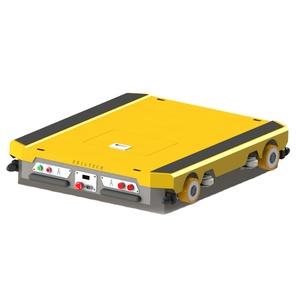
While fully automated AS/RS systems require massive initial capital, hybrid storage architectures are exploding in popularity. Modern warehouses utilize counterbalance forklifts to deposit pallets onto the entry face of deep-lane shuttle racking. The wireless radio shuttle cart transports the load deep into the system. This hybrid model increases space utilization by 40% while preserving the operational flexibility of existing lift truck fleets.
Global procurement teams are prioritizing green supply chains. Manufacturers are shifting toward high-strength cold-rolled steels (such as Q355B and higher yield grades), allowing thinner material gauges to carry higher design loads (L/240 deflection ratio compliance). This reduces raw steel usage by weight, lowers container shipping emissions, and minimizes the embodied carbon of warehouse expansion projects.
Next-generation selective racking systems incorporate embedded IoT load-cell sensors and strain gauges within high-bay beams and critical baseplates. Connected directly to Warehouse Management Systems (WMS), these sensors alert facility managers to overloading, structural column deflection exceeding safety thresholds, or micro-impacts caused by counterbalance truck maneuvers.
With warehouse distribution centers expanding in seismic-active zones across North America, New Zealand, Europe, and Latin America, top suppliers engineered heavy-duty diagonal frame bracing, enlarged baseplates with multi-anchor configurations, and seismic-rated post protectors that comply with FEMA and local building codes.
Engineering answers to technical inquiries submitted by warehouse managers, logistics contractors, and procurement officers.
To produce an accurate CAD layout and structural design, suppliers require: (1) Warehouse building dimensions, clear height under steel joists, and column spacing; (2) Concrete slab thickness and load-bearing capacity (kPa or psi); (3) Pallet dimensions (W x D x H) including overhang and gross weight per pallet; (4) Counterbalance forklift specs: maximum lift height, mast collapsed height, and turning radius (WA) to determine precise aisle width.
Standard 3-wheel electric counterbalance forklifts typically require an aisle width of 3.2m to 3.5m (10.5 ft to 11.5 ft) for standard 1200mm x 1000mm pallets. Heavy 4-wheel internal combustion or high-capacity electric counterbalance trucks generally require 3.7m to 4.2m (12.1 ft to 13.8 ft). Operating with aisles narrower than specified increases structural rack collision risks.
Yes. Rack Pricing Storage Solutions manufactures both North American standard Teardrop compatible components and Canadian/European Redirack style profiles. By sending photos, hole pitch measurements, and column cross-sections, our technical team confirms direct connector and post profile compatibility prior to production.
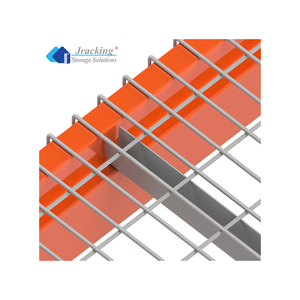
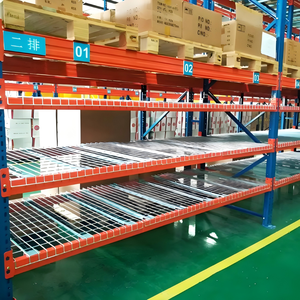
Heavy-duty wire mesh decking offers superior safety advantages: (1) It allows overhead fire sprinkler water to penetrate lower rack levels in compliance with NFPA standards; (2) It provides clear visibility for forklift operators lifting loads at heights over 5 meters; (3) It prevents partial or broken pallets from falling through beam levels while maintaining high strength (up to 1,500kg UDL capacity).
In accordance with ANSI MH16.1 and EN 15512 structural specifications, maximum allowable beam deflection under full design load must not exceed L/240 (where L is the clear span length of the beam). For a standard 2700mm pallet beam, maximum vertical mid-span deflection under total load is limited to 11.25mm.
Components undergo structured bundling: upright frames are strapped with heavy plastic banding, protective corner cardboard, and stretch film. Beams are stacked face-to-face with nesting blocks to avoid paint scratching. Smaller components, hardware, safety pins, and baseplates are packed into heavy-duty reinforced wooden cases or steel crates for efficient container loading and unloading.
For standard indoor distribution centers, electrostatic powder coating (epoxy-polyester) delivers excellent durability. For high-humidity, outdoor storage, or chemical environments, hot-dip galvanizing (HDG) per ISO 1461 is applied, providing a zinc coating thickness of 60–100 microns for decades of rust protection.
A trusted global manufacturer and direct exporter of industrial warehouse storage racks, mezzanines, and logistics handling equipment with over two decades of engineering excellence.
Operating dedicated production facilities equipped with continuous cold-roll forming mills, automated robotic welding stations, precision punching machinery, and fully automated electrostatic powder coating lines. We maintain total quality control from raw steel coil processing to container sealing.
Our experienced engineering department provides complete design support, including customized 2D CAD layouts, structural load recalculations, seismic safety assessments, and 3D warehouse visualization—helping buyers maximize spatial efficiency without compromising safety.
Having supplied major 3PL operators, distributors, and project contractors across North America, Europe, Australia, and the Middle East, our packing and loading procedures maximize cubic container utilization, directly lowering freight costs per pallet position.
All structural designs, beam connectors, and upright profiles are tested and manufactured in compliance with international racking safety standards, including ISO 9001 quality management, EN 15635, and OSHA general industry safety guidance.



