Factory-direct warehouse racking & material handling equipment — 20+ years of manufacturing experience for global B2B buyers.
Factory-direct warehouse racking & material handling equipment — 20+ years of manufacturing experience for global B2B buyers.
Precision-manufactured Q235B & Q355B cold-rolled structural steel storage racking optimized for maximum cubic volume utilization.
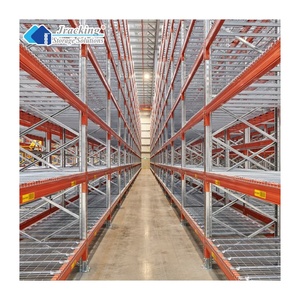
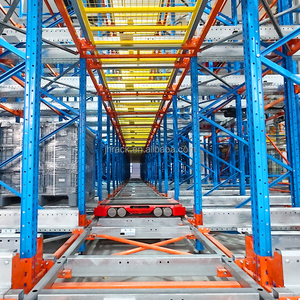
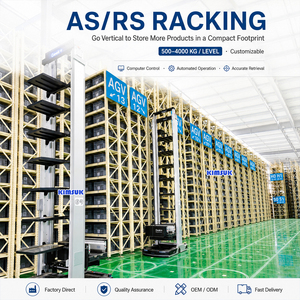
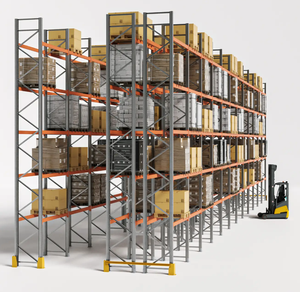
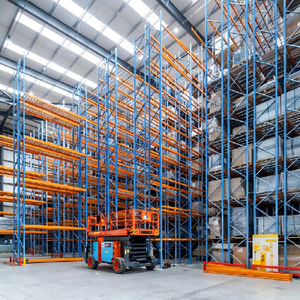
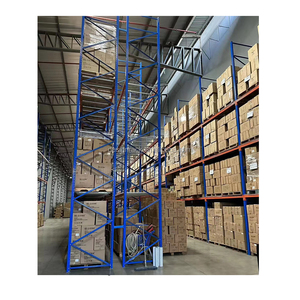
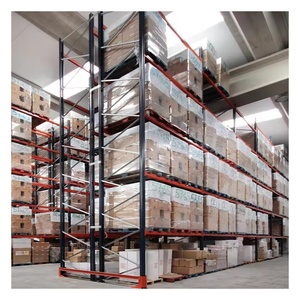
Direct OEM manufacturing capabilities delivering structural integrity, precise component compatibility, and turnkey warehouse engineering.
Full control over continuous roll-forming, robotic MIG welding, punching, and cutting ensures tight tolerances and dimensional consistency across every frame and beam level.
Engineered strictly to conform with international structural standards including Australian Standard AS4084-2012, European EN 15635, and American RMI (ANSI MH16.1) guidelines.
Ability to match existing regional systems (such as Redirack teardrop or 75mm pitch upright profiles) for seamless facility expansions without replacing structural uprights.
Fully automated multi-stage washing, iron phosphate pretreatment, and electrostatic powder coating line supplying durable, scratch-resistant RAL finishes or hot-dip galvanization.
Experienced rack design team providing free 2D space allocation planning, 3D structural modeling, and finite element stress analysis to eliminate installation friction.
Part-numbered bundled steel packaging, heavy-duty edge protection, and container load optimization algorithms to minimize transit damage and lower ocean freight costs.
A rigorous engineering comparison to guide procurement decisions based on volumetric efficiency, SKU selectivity, and operational automation.
| Racking System Architecture | Storage Density (%) | SKU Selectivity (%) | Handling Equipment Type | Max Depth (Pallets) | Optimal Inventory Strategy |
|---|---|---|---|---|---|
| Selective Pallet Racking | 40% – 50% | 100% (Direct Access) | Standard Counterbalance / Reach Truck | 1 Deep | FIFO (First-In, First-Out) |
| Double Deep Racking | 60% – 70% | 50% (Immediate) | Deep-Reach Pantograph Truck | 2 Deep | LIFO (Last-In, First-Out) |
| 4-Way Radio Shuttle System | 80% – 90% | 20% – 30% (Lane Dependent) | Automated Shuttle + Forklift | 4 to 30+ Deep | Flexible FIFO / LIFO |
| Stacker Crane Multi-Deep AS/RS | 90% – 95% | Automated Direct Control | Fully Automated Stacker Crane | 2 to 4+ Deep | Software Automated FIFO |
| Drive-In / Drive-Through Rack | 65% – 75% | 15% – 25% | Standard Forklift (Enters Rack) | 5 to 10 Deep | Strict LIFO (Drive-In) |
Modern distribution centers, 3PL logistics hubs, and cold storage facilities face relentless pressure to maximize floor space usage while managing skyrocketing real estate and operational costs. Traditional single-deep selective racking systems—while providing 100% SKU selectivity—consume up to 60% of total warehouse footprint in aisle space alone. To solve this volumetric inefficiency, custom OEM multi-deep pallet racking systems have emerged as the standard for high-density material handling infrastructure.
As a premier OEM manufacturer with more than two decades of cold-rolled steel structural engineering experience, Rack Pricing Storage Solutions Co., Ltd. produces heavy-duty racking systems engineered precisely for high-load, high-bay environments. This white paper examines the engineering principles, metallurgical considerations, structural load profiles, and automated integration pathways of modern multi-deep racking solutions.
Core Engineering Insight: Transitioning from conventional single-deep selective racking to an optimized Double Deep or 4-Way Radio Shuttle Multi-Deep system can increase warehouse cube utilization by 40% to 110% without expanding the building footprint.
The structural load-bearing performance of high-density multi-deep racking depends on raw material selection and roll-forming profile dynamics. Our factory utilizes high-grade cold-rolled Q235B and structural Q355B steel coil standards. Upright frames are subjected to complex axial compression, bending moments, and impact loads caused by forklift positioning.
Double Deep pallet racking is structured by placing two rows of selective racking back-to-back. To access the rear pallet position, specialized forklifts equipped with pantograph reach mechanisms or extended telescopic forks are required. Double deep systems effectively reduce the ratio of aisles to racking rows, yielding a storage density increase of approximately 30% over standard selective layouts.
When designing custom OEM double-deep racking, structural engineers must calculate higher bending moments on front box beams during pallet insertion and extraction. Because the reach truck extends its load center past the front beam line, stability calculations require rigid floor anchoring using dynamic expansion bolts or chemical anchors tied directly into reinforced concrete floor slabs rated for heavy point loads.
When storage requirements exceed two-pallet depth, passive racking yields to active, automated multi-deep architectures. These advanced systems replace forklift aisle travel with specialized mechanical transport units.
The 4-Way Radio Shuttle system uses autonomous self-powered shuttle carts that travel along specialized guide rails inside storage channels. Controlled via RF remotes or integrated Warehouse Management System (WMS) software, the shuttle elevates pallets, moves them horizontally along the channel, and deposits them at the front picking face. Key technical parameters include:
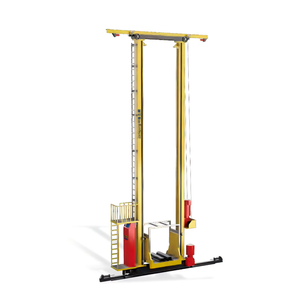
In ultra-high vertical facilities (reaching heights from 15 meters up to 45 meters), multi-deep stacker cranes operate within narrow aisles. The stacker crane features telescopic single or double-deep forks or satellite shuttles capable of placing unit loads weighing up to 1,500 kg into multi-deep racks at high acceleration rates. The racking structure in an AS/RS environment serves as both product storage and structural support for top crane guide rails, requiring stringent manufacturing tolerances (less than 1/1000 vertical deflection ratio under full loading conditions).
Every structural component manufactured in our facility undergoes rigorous multi-stage processing to guarantee long-term operational safety and environmental resistance.
| Component Type | Material Grade Options | Standard Profile / Thickness Range | Surface Treatment & Coating |
|---|---|---|---|
| Upright Columns | Q235B / Q355B High Tensile Steel | 80×60, 90×70, 100×70, 120×95 mm (1.8 – 3.0mm) | Thermosetting Polyester Powder Coat (60–80 μm) |
| Box & Step Beams | Q235B Cold Rolled Steel | 80×50 to 160×50 mm Beam Heights (1.5 – 2.0mm) | Electrostatic Powder Coating in standard RAL colors |
| Shuttle Guide Rails | Q235B / Pre-Galvanized Coil | Specialized 3.0mm Continuous Roll-Formed Track | Hot-Dip Galvanized / Pre-Galvanized Finish |
| Wire Mesh Decking | Cold-Drawn Steel Wire | 50×100 mesh, 4.0–6.0mm Wire Diameter with U-Channels | Bright Zinc Electro-Plating or Powder Coated |
| Upright Protectors | Q235B Heavy Plate / HDPE Plastic | 4.0mm – 6.0mm Steel Channel or Molded Polyethylene | High-Visibility Safety Yellow (RAL 1023) Coating |
Industrial storage racks are constantly subjected to friction, moisture, and potential chemical exposure. Our factory operates an automated multi-stage inline finishing facility:
As global supply chains shift toward hyper-automation, sustainability, and rapid throughput, procurement teams must align their racking infrastructure investments with emerging technology trends over the next decade.
Traditional fixed-aisle systems are giving way to dynamic AMR-driven environments. Modern multi-deep pallet racking designs now incorporate ground-level AMR clearance zones, enabling autonomous floor robots to deliver pallets directly to the picking face of 4-Way Radio Shuttle racks. This hybrid approach eliminates forklift dependency entirely, driving the adoption of fully unlit "Dark Warehouses."
Global logistics operators are actively tracking Scope 3 embodied emissions in warehouse construction. Future procurement mandates favor manufacturers who utilize recycled steel scrap ratios, zero-VOC powder coatings, and energy-efficient roll-forming lines. Our facility's transition to continuous green-energy powered manufacturing supports corporate sustainability targets without compromising yield strength.
Structural failure due to unnoticed forklift damage represents a critical safety risk in high-density facilities. Next-generation racking installations incorporate IoT-enabled strain gauges, impact sensors, and load cells directly inside upright columns and beam connectors. These sensors transmit real-time telemetry to facility managers, identifying frame misalignment or micro-fractures before catastrophic rack collapses occur.
Strategic Sourcing Tip for Buyers: When specifying multi-deep systems for long-term projects, ensure structural drawings account for seismic zone ratings (IBC/UBC standards) and allow for modular expansion or retrofit to automated shuttle rails.
Detailed technical answers addressing custom OEM production, compliance standards, shipping logistics, and structural design.



