Factory-direct warehouse racking & material handling equipment — 20+ years of manufacturing experience for global B2B buyers.
Factory-direct warehouse racking & material handling equipment — 20+ years of manufacturing experience for global B2B buyers.
Custom fabricated to match exact warehouse load distributions, building clear heights, and material handling equipment specifications.
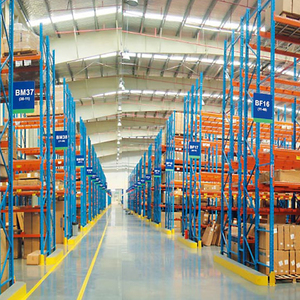
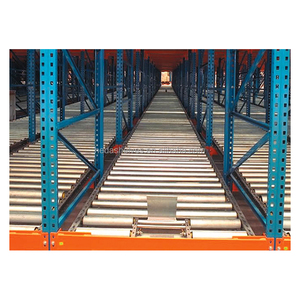
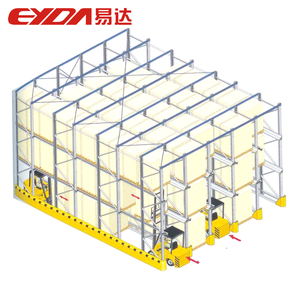
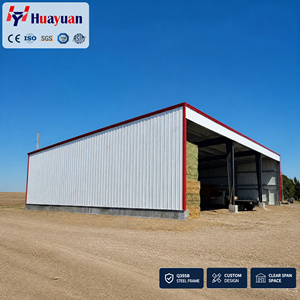
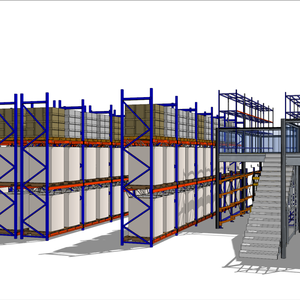
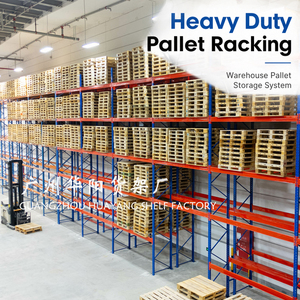
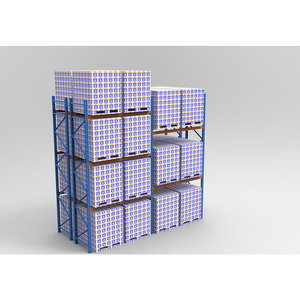
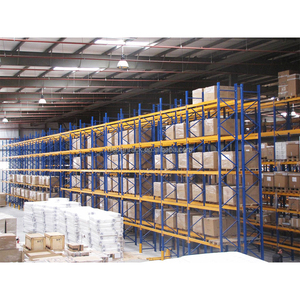
In modern industrial logistics, selecting a qualified Custom OEM High Bay Pallet Racking Manufacturer extends far beyond sourcing cold-formed steel frames. It requires an engineering-first partner capable of calculating complex structural dynamics under peak dead loads, live payload forces, dynamic forklift impact factors, and region-specific seismic coefficients. As a direct OEM factory with over 20 years of international manufacturing expertise, Rack Pricing Storage Solutions Co., Ltd. operates state-of-the-art continuous roll-forming lines, automated robotic welding cells, and an integrated electrostatic powder coating facility.
Our fully integrated manufacturing lifecycle eliminates third-party markups while establishing complete traceability from raw coil slit margins to final export container stowing. Overseas procurement teams benefit from custom OEM profile matching—including precise drop-in compatibility with teardrop standards, Redirack configurations, and European hook-and-beam connections. By maintaining complete oversight of automated punching, roll-forming, degreasing, phosphatizing, and powder curing cycles, we ensure long-term mechanical strength and corrosion resistance across diverse climate zones.
Our dual-line automated powder coating plant applies thermosetting epoxy-polyester coatings cured at 200°C. Achieving a film thickness of 60 to 90 microns, our finished uprights and box beams withstand rigorous salt-spray exposure (ASTM B117) and cross-hatch adhesion testing (ISO 2409).
Designed in compliance with RMI (ANSI MH16.1), EN 15512, and FEM 10.2.02 codes, our high-bay rack structures feature heavy-duty welded baseplates and expansion anchoring systems engineered to dissipate lateral seismic forces in Zone 3 and Zone 4 geographical regions.
We convert complex warehouse floor plans, building clear heights, post-tensioned slab load capacity limits, and forklift turning radiuses into optimized 2D/3D CAD layouts. Maximize volumetric space utilization while preserving 100% pallet accessibility.
As global supply chains shift toward hyper-automated distribution centers, procurement strategies for warehouse storage equipment are undergoing a fundamental transformation. Global enterprise buyers are moving away from standardized off-the-shelf racking toward specialized OEM high-bay configurations designed for seamless integration with robotics, IoT monitoring, and cold-chain resilience.
With industrial land acquisition costs escalating globally, facilities are scaling vertically rather than horizontally. High-bay racking systems exceeding 12 meters to 40 meters (including Rack-Supported Building / Clad-Rack structures) represent the benchmark for modern logistics hubs. These high-bay environments demand tighter manufacturing tolerances (EN 15620 Class 300/400) to support Radio Shuttle Automatic Runners and Automated Storage and Retrieval Systems (AS/RS). OEM manufacturers must produce ultra-straight upright profiles with minimal torsional deviation to ensure smooth robotic transport.
The rapid expansion of online grocery networks and pharmaceutical cold chains has surge-driven demand for specialized cold-storage pallet racking. In sub-zero environments (-30°C), traditional powder coatings risk micro-fracturing due to thermal shock and moisture condensation. The market is shifting heavily toward Hot-Dip Galvanized (HDG) steel racking and pre-galvanized structural profiles that provide self-healing zinc sacrificial protection against aggressive oxidation.
Modern warehouse safety protocols under EN 15635 demand real-time dynamic assessment of structural rack integrity. Future-proof procurement requires racking systems configured to host IoT impact sensors and wireless strain gauges on vulnerable aisle corners and lower upright sections. This technology alerts warehouse managers immediately to forklift collisions, preventing catastrophic rack collapses and minimizing uncontained inventory damage.
Evaluating the optimal high-bay racking geometry requires balancing volumetric storage density against SKU selectivity and material handling throughput requirements. The matrix below outlines key engineering criteria across primary OEM rack types:
| Racking System Type | Storage Density | SKU Selectivity | Max Payload / Level | Handling Equipment Required | Ideal Warehouse Application |
|---|---|---|---|---|---|
| Selective Pallet Racking | Standard (40-50%) | 100% Direct Access | 4,000 kg | Standard Counterbalance / Reach Truck | FMCG Distribution & High-SKU Fulfillment |
| Double Deep Pallet Racking | High (60-65%) | 50% Immediate Access | 3,200 kg | Deep-Reach Forklift Truck | Cold Storage & Batch Production Warehouses |
| Drive-In / Drive-Thru Racking | Very High (75-80%) | Low (LIFO / FIFO) | 2,500 kg | Standard Forklift (Drives inside rack) | Homogeneous Bulk Cargo & Seasonal Goods |
| Radio Shuttle Automation | Maximum (85-90%) | Automated LIFO / FIFO | 2,000 kg / shuttle | Forklift + Automated Pallet Runner | High-Volume Freezer Facilities & Buffer Logistics |
| High Bay AS/RS Structural Rack | Maximum Vertical (>90%) | Automated 100% Access | 3,500 kg | Automated Stacker Crane / RGV / AGV | Fully Automated Smart Warehouses & E-Commerce |
Direct technical answers addressing structural specs, OEM compatibility, factory quality assurance, and international shipping logistics.



