Factory-direct warehouse racking & material handling equipment — 20+ years of manufacturing experience for global B2B buyers.
Factory-direct warehouse racking & material handling equipment — 20+ years of manufacturing experience for global B2B buyers.
Explore top-tier heavy-duty pallet racking, selective systems, radio shuttle integrations, and automated logistics hardware designed direct from our manufacturing facility.
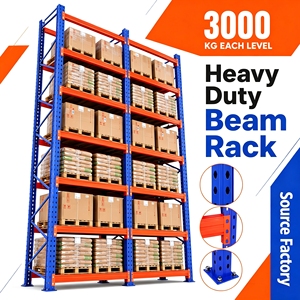
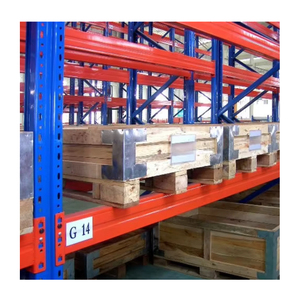
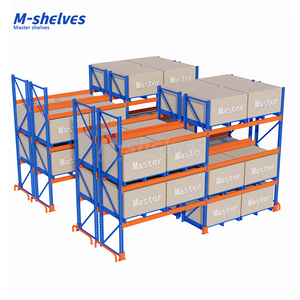
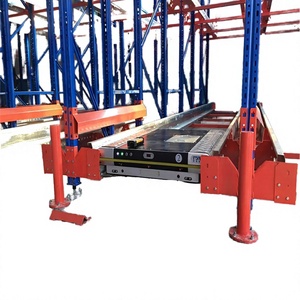
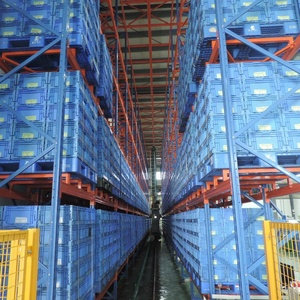
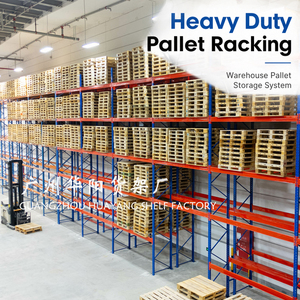
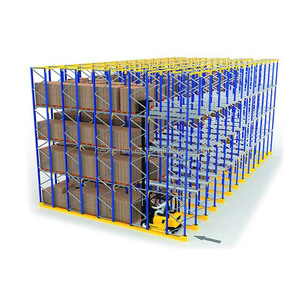
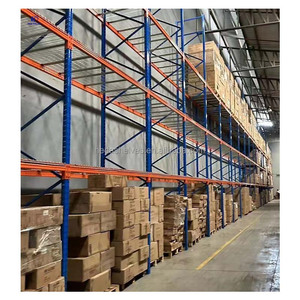
As modern logistics infrastructure faces surging real estate costs and escalating per-square-meter warehouse overheads, enterprise procurement leads are shifting decisively toward high-density storage solutions. Among all selective racking variations, Very Narrow Aisle (VNA) Racking Systems represent the absolute convergence of 100% direct pallet accessibility and optimal floor utilization.
Standard selective racking aisles typically measure between 3.5 meters and 4.5 meters to accommodate conventional counterbalanced forklifts. In stark contrast, a precision-engineered VNA racking system condenses aisle width down to 1.5 to 1.8 meters—effectively increasing warehouse volumetric storage capacity by up to 40% to 50% without requiring physical facility expansion.
Information Gain Insight: VNA systems rely on specialized turret trucks or Articulated Very Narrow Aisle forklifts equipped with rotating mast heads. Because operating clearances inside a 1.6m aisle leave mere centimeters on either side, structural tolerances and floor levelling compliance (DIN 15185 or VDMA standards) govern system viability.
Our OEM/ODM manufacturing plant in China utilizes structural Q235B and Q355B high-grade cold-rolled coil steel to cold-roll upright profiles with specialized geometric cross-sections. This precise profile engineering offers maximum torsional rigidity under heavy top-tier vertical loading (up to 15,000kg to 22,000kg frame capacity).
Heavy-duty steel floor-anchored guide angles (e.g., L-profile or C-profile steel) run parallel along the rack bases, guiding turret truck side-wheels smoothly along the aisle length.
Sub-floor inductive wire emitting low-frequency radio signals, enabling automated steering mechanisms inside the VNA truck without physical steel rails, freeing up floor space for order picking.
High-bay VNA racks reaching heights up to 18 meters utilize top-tie overhead cross-bracing to tie opposing rack rows together, eliminating lateral swaying during high-altitude pallet placement.
| Storage Racking Category | Aisle Width (mm) | Floor Space Utilization | Pallet Accessibility | Forklift Compatibility |
|---|---|---|---|---|
| Very Narrow Aisle (VNA) Racking | 1,500 mm – 1,800 mm | 85% – 90% | 100% Direct Access | VNA Turret Truck / Articulated Forklift |
| Standard Selective Racking | 3,500 mm – 4,500 mm | 40% – 50% | 100% Direct Access | Standard Counterbalance / Reach Truck |
| Double-Deep Pallet Racking | 3,000 mm – 3,500 mm | 60% – 65% | 50% Immediate Access | Pantograph Reach Truck |
| Drive-In / Drive-Thru Racking | N/A (LIFO Channel) | 75% – 80% | Low (FILO / LIFO) | Standard Reach Truck |
| Automated Radio Shuttle Rack | N/A (Deep Lane) | 80% – 88% | Batch / System Controlled | Shuttle Cart + Conventional Forklift |
As international supply chains evolve toward hyper-efficiency, industrial material handling equipment procurement is experiencing a structural shift. Overseas buyers—ranging from 3PL logistics hubs in Europe to cold-storage distribution centers across North America—are applying new criteria when vetting China racking factories.
The rapid adoption of Autonomous Guided Vehicles (AGVs) and Autonomous Mobile Robots (AMRs) has redefined structural tolerance thresholds for VNA systems. Traditional manual turret trucks allow for slight driver adjustments. However, robotic forklifts rely strictly on LiDAR sensors and automated optical positioning systems. Future VNA procurement contracts explicitly mandate zero-tolerance rack beam deflection ratios (staying under L/300 or L/400) and laser-verified upright plumbness during factory manufacturing and installation.
Global enterprises no longer purchase static, rigid racking configurations. Current procurement trends favor fully adjustable beam heights (50mm or 75mm pitch connectors) with integrated teardrop or Redirack compatibility. Buyers demand modular frame components that allow immediate conversion from standard VNA selective racking into multi-tier rack-supported mezzanines or semi-automated shuttle systems as warehouse SKU throughput demands grow.
Environmental, Social, and Governance (ESG) mandates in key Western markets are influencing rack manufacturing requirements. Importers demand traceable raw steel sourcing (such as low-carbon electric arc furnace steel) combined with heavy-metal-free, zero-VOC electrostatic polyester powder coating. In-house powder coating lines operating with automated wastewater recovery systems are rapidly becoming a mandatory qualification metric for primary OEM contracts.
Manufacturing high-bay VNA systems demands stringent engineering control, raw material certification, and advanced robotic manufacturing. The leading China storage rack factories are driving continuous technological breakthroughs across several core domains:
Using Finite Element Analysis (FEA) software, engineering teams simulate dynamic earthquake loads based on FEM 10.2.02 and RMI standards, ensuring upright frame bracing patterns withstand extreme structural stress.
Continuous continuous-punch roll-forming mills process high-tensile steel strip into precision upright profiles with automatic online hole-pitch checking, ensuring sub-millimeter tolerances across 12-meter single-piece frames.
Embedding smart load sensors and impact detectors directly into critical upright bases and beam connectors, alerting warehouse managers via cloud telemetry prior to structural fatigue or forklift impact risks.
Selecting the right OEM/ODM manufacturer in China involves looking beyond raw steel pricing. It requires an engineering partner with total production oversight, international compliance credentials, and end-to-end export support capabilities.
Over two decades of continuous manufacturing experience focused on heavy-duty pallet racking, cantilever racks, longspan shelving, and logistics handling equipment serving global enterprise buyers.
From automated steel slitting, continuous roll-forming, and robotic welding to automated powder coating, every stage is controlled in-house for consistent quality and reliable lead times.
Our dedicated engineering department converts your building floor plans, pallet load metrics, and forklift specifications into detailed 2D/3D CAD layouts and load capacity calculations completely free of charge.
All system designs comply strictly with international safety protocols including EN 15635, FEM 10.2.02, and OSHA 29 CFR 1910 guidance, ensuring smooth local authority sign-offs.
Operating an advanced, multi-stage pre-treatment and electrostatic powder coating line offering custom RAL colors, superior corrosion protection, and uniform film thickness control.
Custom heavy-duty bundling, protective corner guards, step-by-step part-number labeling, and optimized container packing plans maximize freight space while preventing shipping transit damage.
Direct technical answers to the essential operational, structural, and procurement questions raised by enterprise logistics managers and industrial buyers.



