



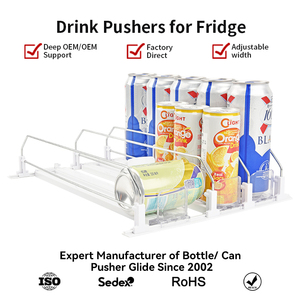
Factory-direct warehouse racking & material handling equipment — 20+ years of manufacturing experience for global B2B buyers.
Factory-direct warehouse racking & material handling equipment — 20+ years of manufacturing experience for global B2B buyers.
Explore our export-tested pallet racking profiles, automated shuttle systems, and modular shelving engineered to international structural integrity standards (EN 15512, FEM 10.2.02, RMI).
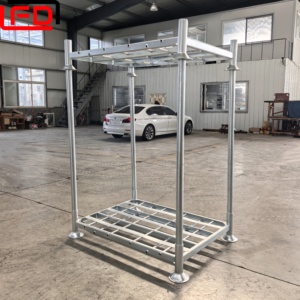
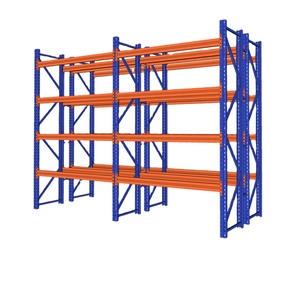
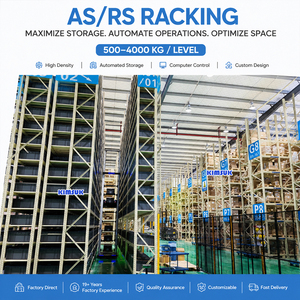
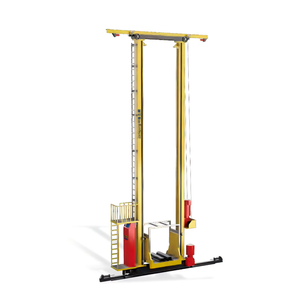
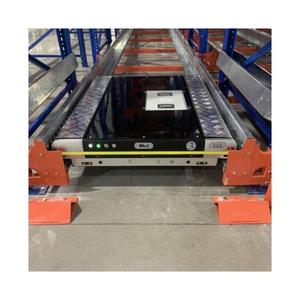
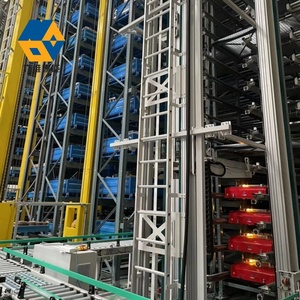
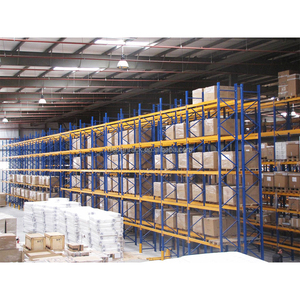
We eliminate supply chain risk through certified raw material sourcing, automated roll-forming precision, strict quality control standards, and integrated global shipping logistics.
Unlike trading intermediaries, our manufacturing facility operates 16 continuous cold roll-forming production lines and an automated continuous electrostatic powder coating system. This guarantees micron-precise beam profiles, high film adhesion, uniform color tone (RAL system), and anti-corrosion protection that resists industrial wear.
Every racking system design undergoes rigorous structural modeling via 3D CAD and Finite Element Analysis. We calculate yield strength limits under dynamic fork-truck loading, frame buckling safety factors, and seismic displacement vectors, complying strictly with FEM 10.2.02 and RMI safety codes.
Export logistics require specialized protection. We bundle upright frames and box beams with protective cardboard edge wrapping, steel strap bindings, and plastic film barriers. Our logistics team utilizes specialized container loading software to maximize cube utilization, reducing ocean freight freight costs per pallet position.
As global supply chains navigate land cost inflation, labor shortages, and inventory complexity, structural storage systems are evolving from static iron racks into high-tech, software-integrated infrastructure.
Traditional selective pallet racking remains essential for flexible, low-SKU environments; however, enterprise procurement is rapidly reallocating capital expenditure toward automated systems. The market share of 4-Way Automated Radio Pallet Shuttles and AS/RS (Automated Storage and Retrieval Systems) is projected to grow at a CAGR of 12.4% through 2030. Warehouses facing sky-rocketing footprint costs in urban hubs use deep-lane shuttle racks to achieve storage density up to 85% of total cubic volume—compared to just 40–45% in conventional selective aisle configurations.
Furthermore, shuttle automation dramatically decreases forklift movement inside storage channels, mitigating upright column damage—which accounts for over 70% of structural failure risks in heavy-duty logistics facilities.
With global pharmaceutical logistics and frozen food processing expanding, demand for specialized cold-storage warehouse racking has surging. Cold environments (-25°C to -30°C) introduce metallurgical brittleness and surface condensation risks. Modern procurement specs are moving away from basic liquid paints toward hot-dip galvanizing (HDG) and specialized low-VOC powder coatings. Galvanized steel racking provides self-healing zinc sacrificial protection against rust, dramatically lengthening system operational lifespans without requiring structural teardowns.
International enterprise buyers in Europe and North America now demand environmental transparency across overseas supply chains. Leading Chinese pallet rack exporters are adopting low-carbon electric arc furnace (EAF) steel and providing verified Material Test Reports (MTR). Choosing structural steel compliant with ISO 14040/44 Life Cycle Assessment standards helps logistics operators fulfill corporate Scope 3 emission reduction targets.
Global logistics operators frequently face interoperability challenges when expanding existing facilities. A significant trend in B2B procurement is sourcing from Chinese manufacturers capable of precision-matching legacy regional standards—such as North American teardrop punch patterns, Canadian Redirack structural shapes, and European EN standard hook profiles. This modular adaptability enables seamless bay extensions without forcing buyers into sole-source lock-ins with domestic vendors.
Discover how structural physics, metallurgical enhancements, and smart sensor integration are re-defining structural warehouse racking capabilities.
Traditional racking relied heavily on standard Q235 grade carbon steel. Leading exporters now utilize high-tensile Q355B (equivalent to S355JR / ASTM A572 Grade 50) steel coils for heavy-load upright posts and box beams. This allows engineers to reduce structural wall thickness while maintaining superior load bearing capacities—yielding lighter, stronger rack profiles that reduce raw material freight weight.
Modern pallet storage design incorporates advanced dynamic response simulations to safeguard structures against seismic shock and sudden emergency braking forces from automated guided vehicles (AGVs). Upright footplates now feature multi-anchor baseplate designs and shock-absorbing rubber pads engineered to dissipate vibrational kinetic energy.
The integration of IoT telemetry into enterprise high-bay racking systems represents a major leap forward. Micro-strain gauges and laser tilt sensors mounted on critical upright nodes send real-time deflection data to facility Warehouse Management Systems (WMS), alerting safety managers to overloading or structural column impacts before failure occurs.
Comparing high-density pallet storage configurations based on engineering parameters, storage density, and operational dynamics:
| Racking System Type | Storage Density | Direct Selectivity | Max Beam Deflection Limit | Forklift Aisle Width Required | Ideal Operational Application |
|---|---|---|---|---|---|
| Selective Pallet Racking | Medium (40-50%) | 100% Direct Access | L/200 (EN 15512 Standard) | 3.0m - 3.5m (Standard Counterbalance) | High SKU diversity, fast turnover distribution centers |
| Drive-In Racking | High (70-75%) | Low (FILO Access) | L/200 to L/150 | Requires forklift entry inside rack | Homogeneous batch goods, cold storage, seasonal inventory |
| Radio Pallet Shuttle | Very High (80-85%) | Medium (FIFO / FILO) | L/250 (High-Precision Rail) | Outer loading aisle only (2.8m - 3.2m) | High-volume distribution, automated logistics hubs |
| AS/RS High-Bay Rack | Maximum (90%+) | 100% Automated Access | L/300 to L/400 (Ultra-Strict) | Narrow Craneways (1.5m - 1.8m) | Fully automated 24/7 dark warehouses, pharmaceutical hubs |
| Cantilever Racks | Custom Density | 100% Open Face | Arm tip deflection specific | Varies based on side-loader type | Pipes, timber, metal sheets, long/irregular loads |
Clear, engineering-backed answers to essential procurement, technical specification, and export logistics questions.
Partner with China’s trusted pallet storage system manufacturer. Contact our engineering team for a free CAD warehouse layout design, structural capacity assessment, and competitive factory-direct pricing.