Factory-direct warehouse racking & material handling equipment — 20+ years of manufacturing experience for global B2B buyers.
Factory-direct warehouse racking & material handling equipment — 20+ years of manufacturing experience for global B2B buyers.
Engineered to FEM 9.831 standards for seamless automated stacker crane, shuttle, and forklift integration.
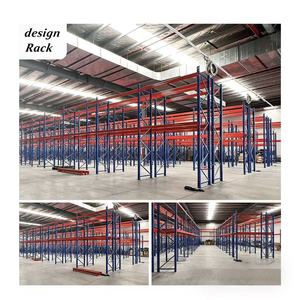
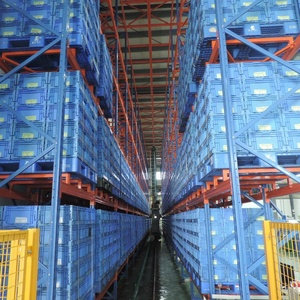
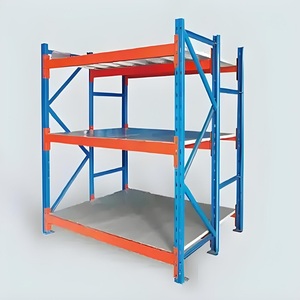
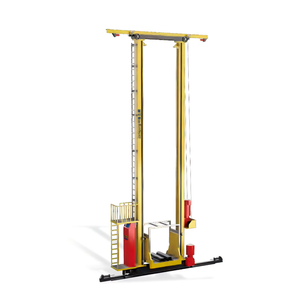
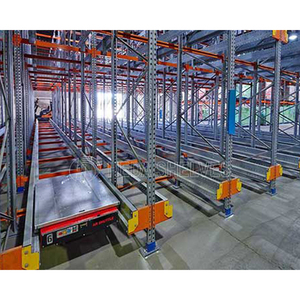
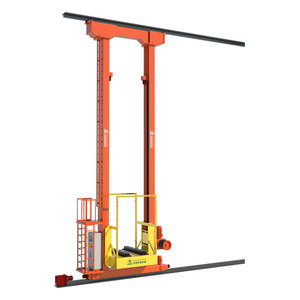
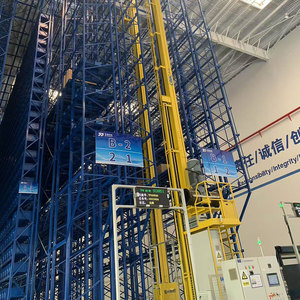
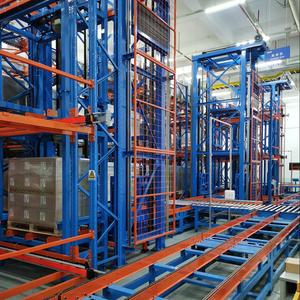
Modern supply chain logistics demand an unprecedented level of spatial utilization, operational velocity, and structural integrity. As global industrial enterprises transition from manual material handling to automated high-bay fulfillment, crane-supported pallet racking systems (often integrated within Automated Storage and Retrieval Systems or AS/RS) have emerged as the foundational backbone of smart logistics infrastructure.
In a crane-supported racking architecture, high-bay steel racks perform a dual function: they supply multi-tier storage for palletized or tote-bound inventory while simultaneously serving as the primary structural support framework for automated stacker cranes, top guide rails, and shuttle transit channels. Manufactured to ultra-tight structural tolerances, these high-density systems eliminate aisle clearance inefficiencies, support vertical heights exceeding 45 meters, and operate flawlessly under high dynamic acceleration forces.
Technical Insight: Unlike standard selective forklift racking, crane-supported racking operates under strict deflection limits (typically L/300 to L/400 for beams, and height-to-sway ratios tighter than H/500). This structural rigidity is mandatory to ensure optical positioning sensors and mechanical telescoping forks on stacker cranes register sub-millimeter precision.
As a premier OEM/ODM manufacturer in China with over two decades of engineering authority, Rack Pricing Storage Solutions Co., Ltd. supplies high-spec crane-supported pallet racking, heavy-duty beam systems, radio shuttle channels, and custom miniload structures for project contractors, 3PL operators, cold chain facilities, and manufacturing plants worldwide.
Building a resilient crane-supported high-bay racking system requires advanced finite element analysis (FEA), precise structural steel selection, and specialized connection technology. When stacker cranes traverse high-bay aisles at velocities up to 240 m/min, dynamic braking and acceleration forces generate lateral sway forces that must be absorbed safely across the steel matrix.
Our upright columns are roll-formed from premium cold-rolled Q235B and high-strength Q355B structural steel profiles. Custom perforated hole patterns allow adjustable beam level pitch increments of 50mm, 75mm, or 76.2mm, maintaining structural integrity without compromising cold-formed strength.
The upper superstructure of our crane-supported racks integrates precision-engineered top-guide rails. These guide beams align stacker cranes vertically and transfer horizontal dynamic loads across top-tier horizontal and diagonal structural bracing trusses into the warehouse floor slab.
| Engineering Parameter | Standard Selective Racking | Crane-Supported AS/RS Racking | Radio Shuttle + Crane Hybrid |
|---|---|---|---|
| Max Structure Height | 12 - 15 Meters | 24 - 45+ Meters | 18 - 30 Meters |
| Load Capacity / Layer | 1,000 - 2,500 kg | 1,000 - 3,500 kg | 1,000 - 1,500 kg (Shuttle) |
| Aisle Width Requirement | 2.8 - 3.5 Meters | 1.4 - 1.8 Meters | 1.5 - 1.8 Meters |
| Structural Tolerance Standard | ISO 15512 / EN 15512 | FEM 9.831 / EN 15635 | FEM 9.831 / ISO 9001 |
| Surface Protection | Standard Powder Coat | Epoxy-Polyester / Galvanized | High-Impact Powder / Hot-Dip Galv. |
Combining 20+ years of factory expertise with complete in-house production control from raw coil processing to export loading.
We control roll-forming, automatic punching, robotic welding, and export packaging in our own factory facility, eliminating intermediate broker markups and ensuring complete batch quality control.
Our dedicated material handling engineers analyze your warehouse clear floor dimensions, slab load capacity, forklift turning radius, and pallet dimensions to generate customized 2D/3D CAD layouts.
Equipped with automated electrostatic thermosetting powder coating lines, we supply durable RAL color finishes and pre-galvanized or hot-dip galvanized coatings designed for high-humidity and cold storage environments.
All upright frames, heavy-duty beams, and crane-support accessories are bundled with protective edge guards, film wrapping, custom part-number tags, and optimized container loading layouts to streamline job site installation.
As international supply chains navigate rising land acquisition costs and labor shortages, procurement directors are altering how they evaluate material handling infrastructure. Future-proofing a warehouse asset requires recognizing three macro sourcing trends currently transforming the industry:
Modern distribution centers are moving beyond single-deep automated crane storage. Sourcing requests increasingly demand stacker cranes equipped with multi-deep radio shuttle carts. This hybrid setup increases storage density by over 60% compared to traditional selective pallet racking while cutting stacker crane capital expenditures.
Instead of constructing a conventional building shell and installing racking inside, buyers are opting for Rack-Supported Buildings. In this structural model, the crane-supported racking framework directly anchors wall cladding and roof trusses, dramatically reducing construction timelines and tax depreciation cycles.
Automated pharmaceutical and frozen food logistics operate in environments ranging from -25°C to -40°C. Sourcing trends prioritize specialized steel chemistries (such as micro-alloyed steel with high Impact Energy Charpy V-notch values) paired with zero-VOC epoxy-polyester coatings to prevent embrittlement and coating flaking.
The global material handling equipment sector is experiencing a technological metamorphosis driven by digital twin modeling, IoT sensor integration, and sustainable manufacturing practices.
Next-generation crane-supported racking systems are increasingly integrated with strain-gauge sensors and IoT vibration monitors installed on main uprights and top guide rails. These sensors feed structural deflection, impact events, and thermal stress data directly to Enterprise Warehouse Management Systems (WMS), enabling predictive maintenance before structural failures occur.
Industrial procurement standards in North America and Europe now prioritize low-carbon steel profiles manufactured via Electric Arc Furnace (EAF) technologies. By optimizing beam cross-section profiles using cold-roll engineering, manufacturers can reduce raw steel mass by up to 12% while maintaining standard 3000KG layer ratings.
Expert answers regarding technical design, compliance standards, custom manufacturing, and international logistics.
Partner with Rack Pricing Storage Solutions for custom engineering, factory-direct pricing, free CAD layout designs, and certified heavy-duty pallet racking systems.



