Factory-direct warehouse racking & material handling equipment — 20+ years of manufacturing experience for global B2B buyers.

0%

Choosing the right China Pallet Racking manufacturer requires more than comparing prices on a supplier directory. Global buyers need dependable steel, accurate drawings, stable production, and clear communication. A rack may look impressive in photographs. Its real value appears under daily warehouse loads.

This guide examines leading Chinese manufacturers through practical purchasing criteria. These include factory experience, engineering capability, quality control, export history, and after-sales support. We consider material thickness, welding consistency, surface treatment, beam testing, and load-rating documentation. Independent certifications can help, but they should not replace direct verification. Ask for factory videos, inspection records, project references, and samples when possible.

Details matter. A pallet frame that is slightly misaligned can complicate installation. Poor powder coating may show rust around bolt holes after repeated handling. Experienced manufacturers usually explain these risks clearly. They also adapt designs for forklifts, seismic conditions, ceiling heights, and local safety requirements. However, no supplier is perfect. Delivery delays, unclear drawings, or changing specifications can still occur. Buyers should confirm every assumption in writing before production begins.

The manufacturers discussed here are selected for their visible capabilities and relevance to international projects, not simply their marketing claims. Their performance should be checked against your warehouse layout, budget, product weight, and compliance needs. A reliable partnership is built through evidence. It is not promised by a low quotation.
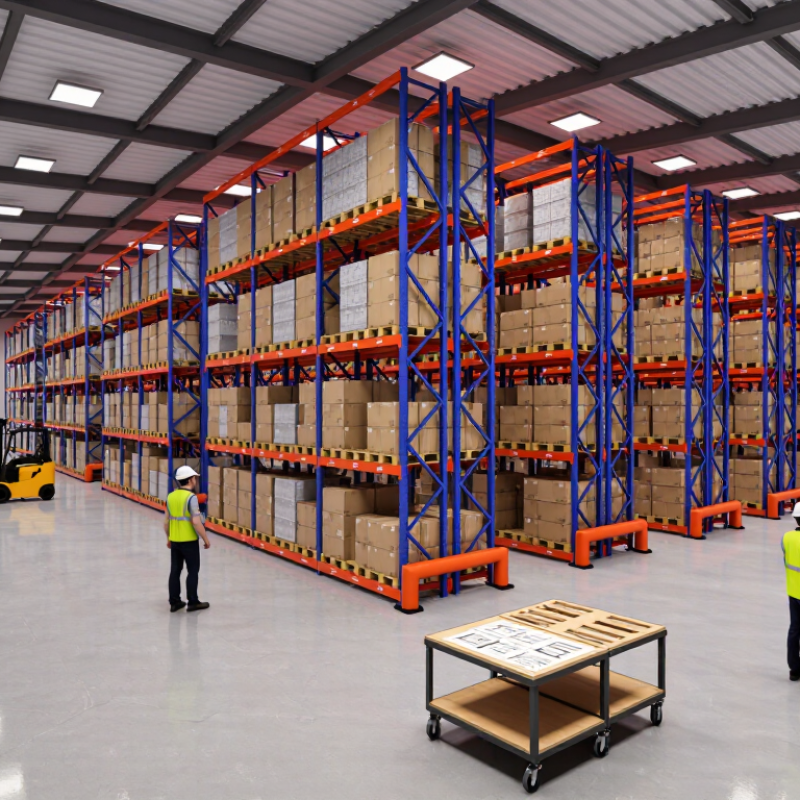
China Top Pallet Racking Manufacturers for Global Buyers

Industry Overview and Role of Chinese Pallet Racking Manufacturers

China Top Pallet Racking Manufacturers for Global Buyers

China’s pallet racking industry is expanding with global warehousing demand. Grand View Research valued the warehouse racking market at approximately USD 9.8 billion in 2023. It also forecasts a compound annual growth rate of about 9% through 2030. This growth reflects higher inventory volumes, tighter storage footprints, and faster order processing requirements.

Chinese pallet racking manufacturers now serve more than price-sensitive projects. Many provide selective racks, drive-in systems, shuttle layouts, mezzanines, and automated storage interfaces. Their role is becoming more technical. Engineers review pallet dimensions, load distribution, aisle widths, floor conditions, and seismic exposure before production. In China, the China Federation of Logistics and Purchasing reported that total social logistics reached RMB 352.4 trillion in 2023, rising 5.2% year on year. Such scale supports extensive testing, component sourcing, and production experience.

Details matter. A small beam deflection can affect forklift handling and pallet stability. Reliable suppliers should provide load calculations, material certificates, welding inspections, and installation guidance. Independent testing remains valuable. Factory confidence is not enough. Some overseas buyers still evaluate racks mainly by unit price, which can create expensive adjustments later. That approach deserves reconsideration. Manufacturing capability varies widely, and catalog specifications may not reflect actual site conditions. Clear drawings, traceable steel, and documented quality checks give global buyers stronger control over safety and long-term operating costs.

Key Types of Pallet Racking Systems Made in China

China’s pallet racking manufacturers supply several system types for warehouses, cold rooms, and distribution centers. Selective pallet racking remains the most flexible choice. It uses upright frames, horizontal beams, and adjustable levels. Each pallet stays accessible. This suits mixed products and frequent picking.

Drive-in racking stores pallets deeply on rails, reducing aisle space and increasing density. It works best with many pallets of the same product.

Push-back racking uses nested carts, allowing several pallets per lane while keeping better selectivity.

Pallet flow racking uses rollers and gravity. It supports first-in, first-out rotation, especially for food, beverage, and date-sensitive inventory.

Double-deep racking adds capacity, but it needs suitable forklifts and disciplined stock control.

Chinese factories also produce cantilever systems for pipes, timber, and other long loads. Mobile racking can reduce fixed aisles, while automated shuttle systems improve throughput in high-volume facilities.

The right choice depends on pallet weight, dimensions, turnover, ceiling height, and local seismic conditions. A catalog drawing is not a warehouse design. In practical project reviews, weak results often come from missing floor-load checks or unclear beam deflection limits.

Request load calculations, material certificates, coating details, installation instructions, and inspection records before purchasing. Confirm recognized design standards and replacement-part availability. Check carefully. Small omissions become expensive later.

How to Evaluate China’s Top Pallet Racking Manufacturers

When evaluating China’s top pallet racking manufacturers, begin with evidence, not impressive catalogs. A capable factory should share production photos, inspection records, and clear load calculations. Ask for steel grades, upright thickness, beam capacity, and allowable deflection. These details reveal whether engineering supports the sales language. Request a sample joint and inspect its locking fit, weld consistency, and coating coverage. A rack that looks strong may perform poorly if holes or connectors vary. Small tolerances matter.

Visit the facility when possible, or arrange a live video audit. Check cutting lines, roll-forming equipment, test areas, storage conditions, and packing methods. An experienced supplier can explain each control without avoiding difficult questions. Reliable evaluation also includes project communication. Ask who approves drawings, how revisions are recorded, and how damaged parts are replaced. Confirm packaging with actual photos showing corner protection, steel bands, labels, and moisture barriers.

References from similar warehouses are more useful than generic testimonials. Speak with customers about delivery accuracy and response speed. My assessment would not stop at the lowest quotation. A cheaper beam can create expensive delays later. Before ordering, compare a signed specification with the final quotation. Some evaluations also miss worker safety during installation. I have made that mistake. Require clear manuals, marked components, and practical training for installers. Keep test reports and approved drawings with the project file.

China Top Pallet Racking Manufacturers for Global Buyers - How to Evaluate China’s Top Pallet Racking Manufacturers

No. Evaluation Dimension Suggested Weight What Global Buyers Should Verify Reliable Evidence or Reference Suggested Scoring
1 Structural Design Capability 20% Confirm that the supplier designs the rack for the required pallet weight, bay width, frame height, beam levels, floor conditions, seismic category, forklift type, and operating clearances. Project-specific calculations, signed drawings, design assumptions, load tables, and compliance with applicable local building and storage-rack requirements. 5 = fully documented design review
3 = partial documentation
1 = catalogue-only selection
2 Standards and Technical Compliance 15% Check whether the proposed system is engineered and installed with reference to recognized standards, rather than relying only on internal specifications. Relevant documentation may reference EN 15512 for adjustable pallet racking design, EN 15629 for specification, EN 15635 for use and maintenance, or ANSI MH16.1 where applicable. 5 = applicable standards clearly identified
3 = standards listed but not mapped
1 = no technical reference
3 Material and Component Quality 15% Evaluate steel specifications, coil traceability, weld quality, connector design, upright thickness, beam profiles, base plates, anchors, and protective components. Material certificates, incoming-inspection records, dimensional inspection reports, weld procedures, coating or paint specifications, and component test reports. 5 = traceable and independently verifiable
3 = internal records only
1 = no traceability
4 Manufacturing and Quality Control 12% Review process control from roll forming, cutting, punching, welding, surface treatment, packaging, and final inspection. Quality-control plan, inspection checkpoints, calibration records, nonconformance procedures, production photographs, and pre-shipment inspection reports. 5 = documented control at every key stage
3 = basic inspection process
1 = visual inspection only
5 Factory Verification and Production Capacity 10% Verify whether the supplier operates the claimed production facility and can support the required quantity, delivery schedule, customization, and repeat orders. Live video or third-party factory audit, equipment list, production-flow review, capacity planning, order records with confidential information removed, and confirmed lead times. 5 = independently verified capability
3 = supplier evidence only
1 = unclear production source
6 Customization and Engineering Support 10% Assess the ability to adapt rack geometry, beam levels, pallet types, aisle layouts, guarding, accessories, finishes, and installation details to the warehouse. Layout drawings, CAD or 3D files, revision history, engineering response times, sample calculations, prototype approval process, and installation method statements. 5 = strong project engineering support
3 = limited modification capability
1 = standard products only
7 Surface Protection and Corrosion Resistance 6% Match the coating system to indoor, humid, cold-storage, coastal, or chemically exposed environments and identify areas requiring additional protection. Coating specification, surface-preparation method, thickness inspection records, finish samples, corrosion-risk assessment, and environmental suitability statement. 5 = environment-specific specification
3 = general coating specification
1 = finish not documented
8 Packaging, Export Experience, and Documentation 5% Check export packing, container utilization, moisture protection, part identification, loading plans, shipping marks, and document accuracy. Packing specification, container-loading photographs, packing list, commercial invoice, bill-of-lading process, installation manual, and spare-parts list. 5 = export-ready documentation
3 = standard documentation
1 = buyer must organize details
9 Installation, Inspection, and After-Sales Service 4% Clarify responsibility for installation supervision, acceptance inspection, damage claims, replacement parts, technical support, and periodic rack inspection. Warranty terms, service-level agreement, installation checklist, inspection form, response-time commitment, spare-parts policy, and escalation contacts. 5 = defined service process
3 = basic warranty only
1 = no clear support channel
10 Total Cost and Commercial Transparency 3% Compare total landed cost rather than unit price alone, including engineering, tooling, packaging, freight, duties, installation, spare parts, and future expansion. Itemized quotation, Incoterms® 2020 rule, payment schedule, tooling ownership terms, validity period, freight assumptions, warranty exclusions, and change-order policy. 5 = fully itemized quotation
3 = mostly itemized
1 = bundled or unclear price
Total Suggested Weight 100% Use the weighted score together with an independent technical review and project-specific compliance confirmation.

Scoring guide: Multiply each category score by its suggested weight. A high score should not replace a professional structural assessment, local code review, or an on-site inspection before final approval.

Quality Standards, Certifications, and Customization Options

For global buyers, a leading Chinese pallet racking manufacturer must prove more than low pricing. Quality begins with certified steel, controlled welding, and traceable batch records. ISO 9001 supports consistent production, but it does not replace engineering evidence. Buyers should request load tests, material certificates, and inspection reports for every major component. EN 15512, ANSI MH16.1, and local seismic requirements provide useful design benchmarks. These standards address stability, load capacity, tolerances, and safe operation. Still, certification alone can hide weak installation practices.

Customization should match the warehouse, not merely the product catalogue. Engineers may adjust beam lengths, upright profiles, decking, guide rails, and corrosion protection. A cold-storage project may require coated surfaces and impact-resistant details. An automated facility needs accurate clearances and compatible interfaces. The MHI 2024 Annual Industry Report reported that 55% of surveyed supply-chain leaders planned to increase technology investment, creating stronger demand for adaptable storage systems. However, customization can increase risk when drawings change late. That point deserves honest review. Experienced suppliers should provide stamped calculations, 3D layouts, anchor specifications, and installation training. Buyers also need clear warranty terms and spare-part support. Small details matter. A missing load sign can create confusion years later. On-site audits, sample inspections, and independent testing remain practical safeguards when comparing manufacturers.

Export Services, Pricing Factors, and Global Buyer Considerations

China’s pallet racking manufacturers often support global buyers with design, production, packaging, and export coordination. Experienced suppliers can convert warehouse drawings into layouts, load calculations, and installation instructions. Ask for stamped technical documents, material specifications, and inspection records before approving production. Small details matter, such as beam labels, column protectors, and moisture-resistant packaging.

Pricing depends on steel grade, rack dimensions, surface treatment, loading capacity, order volume, and customization. Powder coating may cost more than basic painted finishes. Galvanized components can suit humid warehouses but increase the initial budget. Freight also changes the final price. Buyers should compare FOB, CIF, or DDP quotations carefully. Duties, port charges, unloading, and local installation may be excluded. A low quote can still mislead.

Export service quality deserves equal attention. Request production schedules, pre-shipment photos, packing lists, and independent inspections when practical. Confirm whether drawings match local safety requirements and seismic conditions. Communication can fail across languages and time zones. Use clear approval records. After-sales support should cover replacement parts, installation questions, and damage claims. I have seen projects delayed because one connector was missing. That mistake was small, but expensive. Buyers should also question unusually short lead times, because speed sometimes hides limited quality control. A careful supplier may admit a weakness and propose a correction. That honesty is more useful than perfect sales language.

China Top Pallet Racking Manufacturers for Global Buyers

Export Services, Pricing Factors, and Global Buyer Considerations

The chart compares nominal length and width measurements for widely used pallet footprints in international warehouse planning. Pallet dimensions affect rack bay design, storage density, container loading, handling equipment, and export packaging requirements. Buyers should confirm the destination market standard, load capacity, steel specification, surface treatment, delivery terms, and installation or technical support before comparing quotations.

FAQS

Why are Chinese pallet racking manufacturers attracting global warehouse buyers?

They offer selective racks, drive-in systems, shuttle layouts, mezzanines, and automation-ready designs. Their experience supports varied warehouse needs. Price is only part of the appeal.

What information should buyers provide before requesting a rack design?

Provide pallet dimensions, pallet weight, aisle widths, floor conditions, ceiling height, and seismic details. Forklift type also matters. Incomplete data can create expensive redesigns.

Which quality documents should buyers request?

Request material certificates, load calculations, welding inspection records, and batch traceability documents. Independent testing adds useful confidence. Factory promises are not enough.

Does an international quality certificate guarantee safe pallet racking?

No. A certificate supports production consistency, but it does not replace engineering evidence. Installation quality, anchors, floor conditions, and load signs still matter. This point is often underestimated.

How can pallet racking systems be customized for different warehouses?

Engineers can adjust beam lengths, upright profiles, decking, guide rails, and surface protection. Cold storage may need coated surfaces. Automated facilities require precise clearances and compatible interfaces.

What factors influence the final pallet racking price?

Steel grade, rack dimensions, loading capacity, surface treatment, order volume, and customization affect pricing. Freight also changes the total. A low quotation may exclude duties, unloading, or installation.

What export services should global buyers expect?

Reliable suppliers may provide layouts, technical drawings, packing lists, production schedules, and installation instructions. Request pre-shipment photos. Confirm every document before production approval.

How can buyers reduce installation and delivery problems?

Use clear drawing approvals and request beam labels, column protectors, and moisture-resistant packaging. Check every package after arrival. One missing connector can delay an entire project.

How should buyers evaluate unusually short delivery times?

Ask how production speed affects inspections, welding checks, packaging, and documentation. Fast delivery sounds attractive. It may hide limited quality control. A supplier admitting a weakness can be more trustworthy.

Conclusion

China has become a major manufacturing hub for Pallet Racking, supplying warehouse storage solutions to businesses across many markets. Its manufacturers commonly produce selective pallet racks, drive-in systems, push-back racks, pallet flow racks, cantilever racks, and automated storage-compatible structures. These systems support different warehouse layouts, load requirements, access needs, and inventory turnover rates, making them suitable for logistics centers, factories, retailers, and distribution facilities.

When evaluating a Chinese manufacturer, global buyers should examine production capacity, engineering expertise, material quality, welding and coating processes, load testing, and quality-control procedures. Reliable suppliers should be able to provide relevant certifications, clear technical documentation, safety information, and customization options for dimensions, load levels, finishes, and installation requirements. Buyers should also compare steel costs, design complexity, shipping conditions, packaging, lead times, after-sales support, and export experience. A thorough assessment of these factors can help international customers select a practical, durable, compliant, and cost-effective pallet racking solution.


Ethan

Ethan

Ethan is a professional marketing specialist with a strong understanding of the company’s products, services, and market direction. Through continuous research and practical experience, he translates complex product features into clear, useful insights that help customers make informed decisions.......

