Global buyers are rethinking warehouse space, labor, and inventory speed. Wide Aisle Pallet Racking remains a practical choice for many operations. It offers direct pallet access, flexible beam levels, and easier forklift movement. The trade-off is clear. Wider aisles consume more floor space.
MHI’s 2024 Annual Industry Report identifies robotics and automation as major investment priorities for supply chain leaders. However, automation cannot correct poor rack planning. A rack system still depends on pallet dimensions, load weights, forklift turning radius, building height, and local seismic requirements. The U.S. Rack Manufacturers Institute standard ANSI MH16.1 also highlights the importance of engineered design and safe operating conditions. These details matter more than attractive warehouse photographs.
John J. Bartholdi III, a respected warehousing researcher and co-author of Warehouse & Distribution Science, describes the warehouse objective as delivering “the right product, in the right quantity, at the right time, and in the right condition.” That principle guides this comparison. The following ten Wide Aisle Pallet Racking types examine selective access, storage density, handling equipment, installation complexity, and long-term adaptability. Some systems look efficient on paper. They may disappoint under real traffic, uneven floors, or changing SKU profiles. That is the uncomfortable part. Global buyers should compare engineering drawings, operating data, safety provisions, and total ownership costs before choosing a rack design.
What Wide Aisle Pallet Racking Is and How It Supports Global Warehouses
Top 10 Wide Aisle Pallet Racking Types for Global Buyers
What Wide Aisle Pallet Racking Is and How It Supports Global Warehouses
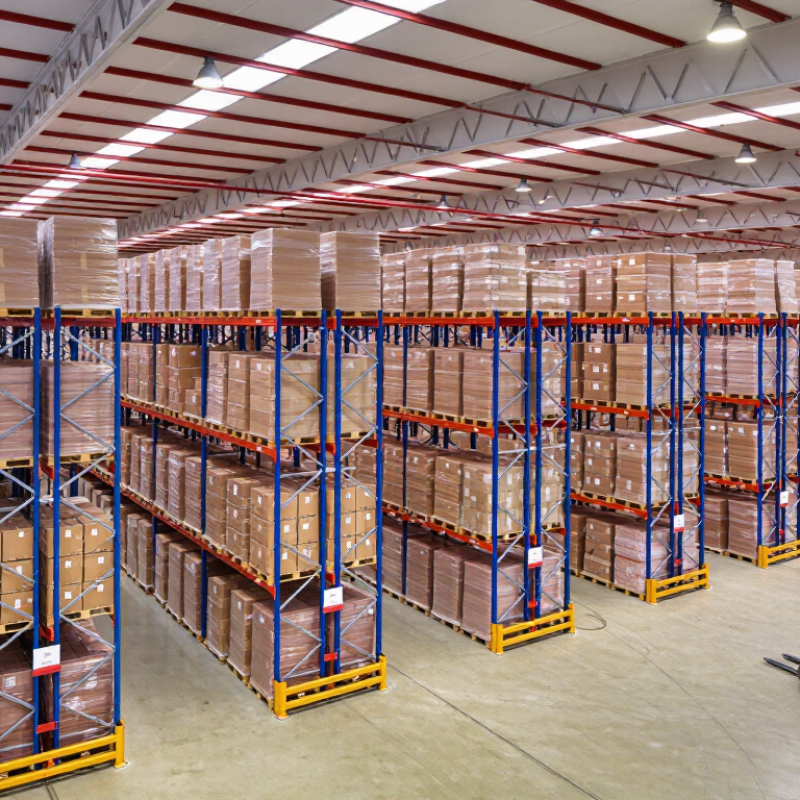
Wide aisle pallet racking leaves enough clearance for conventional counterbalance forklifts, usually about 3.0 to 3.7 meters. It offers direct pallet access and supports selective, double-deep, drive-in, and pallet-flow configurations. The best choice depends on SKU variety, pallet weight, turnover, and handling equipment.
Visibility matters.
In global warehouses, wide aisles simplify receiving, replenishment, cycle counting, and emergency access. They also support multiple pallet standards when layouts include adjustable beams and clearly marked locations. The 2024 WERC DC Measures report records median order-picking accuracy at 99.8%. Accurate storage locations help warehouses protect that performance.
MHI’s 2024 Annual Industry Report found that 55% of supply chain professionals expected higher technology investment within two years. Racking remains part of that investment. Sensors, barcode scanning, and warehouse software can improve location control, but they cannot repair a poor aisle plan. The 2024 edition of the Global Warehousing Survey also highlights continuing pressure from labor shortages and inventory complexity.
A practical design should respect forklift turning radius, rack protection, floor capacity, fire-safety requirements, and local engineering rules. Wider aisles improve maneuverability, yet they consume valuable floor space. That compromise is real. A dense layout may look efficient on paper but create slower travel and more product damage. Experienced planners should test traffic flows with actual forklifts, pallet dimensions, and seasonal volume before final approval.
The Ten Main Wide Aisle Pallet Racking Types and Their Structures
Top 10 Wide Aisle Pallet Racking Types for Global Buyers
The Ten Main Wide Aisle Pallet Racking Types and Their Structures
Warehouse surveys show that aisle width affects access, labor, and equipment choice. Terminology also varies by market. Selective pallet racking uses upright frames, horizontal beams, and rear bracing. It gives forklifts direct access to every pallet. Double-deep racking places two pallet rows behind each other. Special reach trucks are usually required. Drive-in racking forms deep storage lanes with guide rails and one main entry. Drive-through racking adds access at the opposite end. Both systems suit large quantities of similar stock.
Push-back racking uses nested carts or rollers inside each lane. Loading pushes earlier pallets toward the rear. Pallet-flow racking uses inclined rollers and front-facing picking positions. It can support first-in, first-out rotation when lanes are controlled carefully. Mobile racking mounts rack rows on motorized bases. Closed aisles may reduce floor waste. However, floor strength and emergency release planning need attention.
Structural pallet racking uses bolted or welded steel frames for demanding loads. Pallet shuttle racking places a powered shuttle inside deep lanes. Automated storage and retrieval racking combines steel structures, cranes, software, and fixed load positions. These systems require accurate pallet dimensions. An overlooked issue is cantilevered load behavior during forklift turning. I would not specify any rack before checking slab capacity, seismic risk, pallet quality, and fire protection requirements. The best design is sometimes less dense, but easier to operate safely.
How Each Racking Type Handles Storage Capacity, Access, and Forklifts
Top 10 Wide Aisle Pallet Racking Types for Global Buyers
How Each Racking Type Handles Storage Capacity, Access, and Forklifts
Selective pallet racking offers direct access to every pallet, but uses more aisle space. Double-deep racking increases storage density, although forklifts need longer reach and better load control. Drive-in racking stores high volumes of similar goods through shared lanes. It reduces access speed. Drive-through racking allows entry from both ends, improving rotation but requiring careful traffic planning. Push-back racking uses nested carts and supports several pallets per lane. Forklift access is faster than drive-in systems, though inventory rotation remains limited.
Pallet flow racking uses rollers and gravity for first-in, first-out movement. It suits chilled goods and date-sensitive stock, but installation costs can be higher. Mobile racking places rails beneath moving rack rows, increasing capacity while reducing open aisles. Forklifts still need precise positioning. Very narrow aisle racking uses specialized turret or articulated forklifts. It can maximize vertical space, but floor flatness becomes critical. Adjustable pallet racking remains flexible for mixed loads and changing SKUs. Structural pallet racking handles heavier loads, yet its design requires verified building and floor data.
The 2024 MHI Annual Industry Report states that 74% of supply-chain leaders expect to adopt robotics and automation within five years. That trend makes forklift compatibility increasingly important. Capacity figures alone can mislead. Pallet dimensions, beam levels, clearances, and operator training often change the result. In practice, a dense layout may slow picking. I have seen plans that looked efficient on paper fail during peak-hour turning tests. Safety checks and independent load calculations should remain non-negotiable.
Top 10 Wide-Aisle Pallet Racking Types for Global Buyers
Relative planning scores compare how each racking type typically balances storage capacity, direct pallet access, and forklift flexibility. Higher scores indicate stronger performance for that criterion.
The scores reflect established warehouse-design characteristics: dense systems generally reduce access, while selective and mobile systems provide broader access with lower or more complex capacity efficiency. Actual results vary with pallet dimensions, ceiling height, aisle width, fire-code requirements, and forklift specifications.
Key Specifications Global Buyers Should Compare Before Purchasing
Top 10 Wide Aisle Pallet Racking Types for Global Buyers
Global buyers should compare specifications, not attractive catalog images. The 2024 MHI Annual Industry Report reported that 55% of surveyed supply chain professionals planned to increase innovation investment. That investment should begin with measurable rack performance. Compare selective, double-deep, drive-in, push-back, pallet-flow, cantilever, mobile, shuttle, automated, and very-narrow-aisle systems by capacity and operating conditions.
Numbers matter. Fit matters more. Check each bay’s safe working load, beam length, upright profile, and clear height. Confirm pallet dimensions, floor flatness, forklift turning radius, and required aisle width. A rack designed for 1,000 kilograms per level may fail commercially if the floor cannot support concentrated loads. The Rack Manufacturers Institute specification ANSI MH16.1 provides useful guidance for structural design, testing, and labeling. Buyers should request stamped calculations and independent inspection records where local rules require them.
Safety details deserve equal attention. Compare seismic design, anchor size, corrosion protection, impact guards, mesh decking, backstops, and load plaques. The 2024 Global Status Report for Buildings and Construction highlights the continuing importance of embodied carbon and operational efficiency; lighter steel can help, but only when capacity remains adequate. I would not treat a lower quote as a better specification. It may exclude installation, testing, fire protection, or replacement parts. A practical comparison sheet should record tolerances, paint or galvanizing quality, inspection frequency, warranty limits, and technician availability. Some assumptions will be wrong. Recheck them with actual pallet weights and forklift measurements.
Safety, Compliance, Installation, and Supplier Evaluation Criteria
Top 10 Wide Aisle Pallet Racking Types for Global Buyers
Wide-aisle systems include selective, double-deep, drive-in, drive-through, push-back, pallet-flow, cantilever, carton-flow, mobile, and shuttle-assisted racks. Each design changes access, density, and inspection needs. Selective racks offer direct pallet access, but they consume more floor space. Double-deep storage improves density, yet requires compatible handling equipment and strict load planning.
Safety begins with verified load data, floor capacity, anchoring, and impact protection. In 2022, the U.S. Bureau of Labor Statistics recorded 4.8 recordable cases per 100 full-time workers in warehousing and storage. Private industry averaged 2.8 cases. This gap deserves attention. OSHA guidance also stresses aisle clearance, stable stacking, operator training, and damaged-rack control. Global buyers should request calculations, drawings, installation procedures, and inspection records. Compliance may involve local building codes, seismic rules, EN 15635, or ANSI/RMI specifications. One standard rarely covers every location.
Tips: Ask suppliers for a site-specific risk assessment, not only a product catalogue. Check steel grades, beam deflection limits, anchoring details, and replacement-part availability. Confirm installer qualifications and handover documents. MHI’s 2024 Annual Industry Report highlights continuing investment in automation and digital tools, but basic rack discipline still matters. A sensor cannot repair an overloaded beam. Supplier comparisons often miss maintenance response time. That is a mistake worth challenging. A perfect layout rarely survives real traffic, changing pallets, and rushed shifts.
FAQS
It uses broad forklift aisles for direct access, easier turning, and flexible pallet handling. Every pallet remains reachable. However, it usually needs more floor space than dense storage systems.
Upright frames, horizontal beams, and rear bracing create individual pallet locations. Forklifts can reach each position directly. This suits varied inventory, but storage density is lower.
Double-deep racking places two pallet rows behind one another. It usually requires compatible reach equipment. Drive-in racking uses guide rails and one main entry. Drive-through racking adds access at both ends. These systems suit large batches of similar stock.
Push-back racks use carts or rollers inside each lane. Loading moves earlier pallets toward the rear. Pallet-flow racks use inclined rollers and front picking positions. Careful lane control can support first-in, first-out rotation. Discipline matters.
Mobile racks move on powered bases and can close unused aisles. Shuttle racks use powered carriers inside deep storage lanes. Automated systems combine cranes, software, steel structures, and fixed pallet positions. Accurate pallet dimensions are essential. Automation is not magic.
Check slab capacity, seismic risk, pallet quality, fire protection, and expected loads. Also review forklift turning behavior and aisle clearance. A dense layout may look efficient but operate poorly during busy shifts.
Verify load calculations, anchoring, impact protection, stacking stability, and operator training. Inspect damaged beams quickly. Keep replacement parts available. A sensor cannot repair an overloaded beam.
Request site-specific risk assessments, drawings, installation procedures, and inspection records. Check steel grades, beam deflection limits, installer qualifications, and handover documents. Confirm local building and seismic requirements. Response time after installation also matters. Catalogues are not enough.
Conclusion
Wide Aisle Pallet Racking is a flexible storage solution designed for warehouses that require direct pallet access, straightforward inventory control, and compatibility with conventional forklifts. The ten main configurations commonly considered by global buyers include selective, double-deep, drive-in, drive-through, push-back, pallet flow, mobile, narrow-frame, high-bay, and customized adjustable systems. Each structure offers a different balance of storage density, selectivity, loading method, and forklift maneuverability, allowing warehouses to match racking design with product turnover, pallet dimensions, and available floor space.
Before purchasing, buyers should compare load capacity, beam and frame dimensions, rack height, aisle width, pallet compatibility, floor conditions, corrosion protection, and the required forklift type. Safety and compliance are equally important, including structural calculations, rack protection, anchoring, signage, inspection procedures, and installation standards suitable for the destination market. A reliable supplier should provide clear technical drawings, quality documentation, installation guidance, spare-part support, and practical training to ensure the system performs safely and efficiently throughout its service life.