Choosing Heavy Duty Pallet Racking is not simply a matter of buying the tallest frame or the cheapest beam. It is a warehouse engineering decision. Every pallet has a weight, width, height, and loading pattern. Those details affect rack capacity, aisle clearance, forklift movement, and daily safety.
John Nofsinger, a former Rack Manufacturers Institute executive director, offers a practical warning: “Select the rack for the load, the building, and the operation—not for appearance alone.” That principle deserves attention. A strong-looking frame can still be unsuitable for uneven pallets, high impact traffic, or changing inventory. The numbers must work.
This guide examines the decisions behind a dependable Heavy Duty Pallet Racking system. It considers pallet dimensions, beam levels, upright capacity, clearances, floor conditions, seismic requirements, and forklift reach. It also explains why professional layout planning matters before installation begins. A rack should fit the warehouse, not force workers to adapt awkwardly around it.
Walk through the intended aisles. Measure the turning space. Watch how pallets are actually handled. Real operations often differ from drawings.
A careful selection process should include load calculations, supplier documentation, installation quality, and scheduled inspections. Relevant RMI guidance and local workplace safety requirements should also be reviewed with qualified professionals. This is not an area for confident guessing. One overlooked assumption can reduce usable capacity or create expensive modifications later.
Good racking supports productivity quietly. It stores more, moves better, and gives workers clearer working space. Yet no system is perfect. Conditions change, and the design should allow thoughtful review.
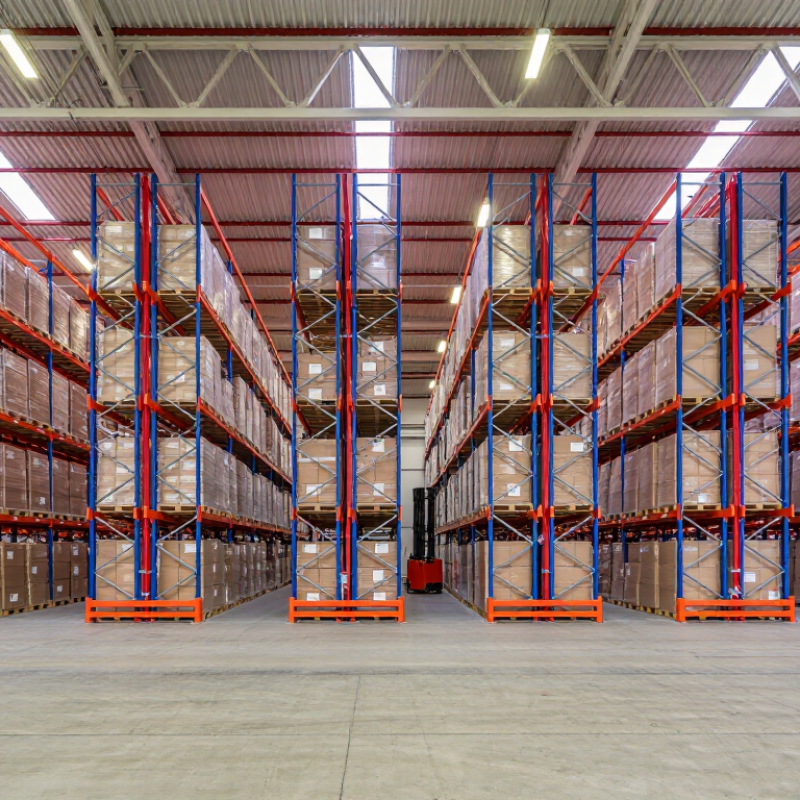
Define Your Warehouse Storage Needs and Operating Conditions
How to Choose Heavy Duty Pallet Racking for Your Warehouse?
Define Your Warehouse Storage Needs and Operating Conditions
When I assess a warehouse, I begin with the products, not the rack design. Record pallet dimensions, weights, quantities, and turnover rates. Measure the heaviest real load, including packaging and uneven weight distribution. Guessing here can create expensive safety problems later.
Check the building slab, clear height, column positions, doors, lighting, and sprinkler clearance. A tall rack may increase capacity, but it can also restrict forklift movement. Define the required aisle width for your actual equipment, not a catalog example. Leave space for turning, inspections, and damaged pallets.
Operating conditions matter just as much. Note temperature, humidity, dust, cold storage, and possible impacts from forklifts. Select frames, beams, and guards with suitable corrosion resistance and protection. Confirm rated capacities with a qualified rack engineer and follow applicable local safety requirements. Keep clear load labels at every bay.
I once focused too heavily on storage density and underestimated picking congestion. That mistake reduced daily output. Capacity is not the same as efficiency. Review peak inventory, future growth, and loading patterns with warehouse staff. Their practical observations often reveal blocked routes or awkward pallet handling that drawings miss. Fresh measurements are worth the extra hour.
Calculate Load Requirements and Select Suitable Rack Specifications
Choosing heavy-duty pallet racking starts with accurate load calculations, not aisle appearance. Record each pallet’s weight, dimensions, load center, and stacking pattern. Add the heaviest realistic combination, not the average shipment. A 1,000-kilogram pallet stored three levels high may require beams rated above 3,000 kilograms per pair. However, frame height, beam deflection, floor quality, and seismic conditions can reduce usable capacity.
The 2024 MHI Annual Industry Report found that 83% of supply chain professionals expect technology adoption to increase within the next five years. That trend makes reliable rack data more important. Connect rack specifications with inventory records, barcode scans, and inspection logs. Select upright frames with suitable height, depth, bracing, and base plates. Choose beam lengths that fit the pallet width while maintaining safe clearances. Never treat a manufacturer’s capacity label as universal; it depends on the exact configuration and installation.
A practical warehouse test is useful. Place a loaded pallet in the proposed bay and check stability, beam deflection, and forklift clearance. Then inspect the floor and anchors. OSHA 1910.176(b) requires stored materials to remain stable and secure. In practice, teams often underestimate damaged uprights and uneven slabs. I have seen capacity calculations fail because pallet weight excluded packaging. That small mistake can distort every specification. Have a qualified engineer verify the final layout, especially after changing beam levels or forklift equipment.
How to Choose Heavy Duty Pallet Racking for Your Warehouse? — Calculate Load Requirements and Select Suitable Rack Specifications
| Warehouse Scenario |
Pallet Size
(L × W × H) |
Load per Pallet |
Pallets per Beam Level |
Calculated Beam Load
(per pair) |
Recommended Beam Rating
(per pair) |
Storage Levels |
Recommended Upright Height |
Recommended Frame Depth |
Typical Bay Width |
Key Selection Considerations |
| Example Heavy-Duty Selective Pallet-Racking Configurations |
| Standard packaged goods |
1,200 × 1,000 × 1,200 mm |
800 kg |
2 |
1,600 kg |
≥ 2,000 kg |
4 beam levels |
6,000 mm |
1,100 mm |
2,700 mm |
Allow approximately 75–100 mm clearance between adjacent pallets and at least 75 mm side clearance from the frame. |
| High-density industrial components |
1,200 × 1,000 × 1,200 mm |
1,000 kg |
2 |
2,000 kg |
≥ 2,500 kg |
4 beam levels |
6,000 mm |
1,100 mm |
2,700 mm |
Use a beam rating that exceeds the calculated uniformly distributed load and verify the pallet condition before storage. |
| Very heavy machinery parts |
1,200 × 1,000 × 1,500 mm |
1,500 kg |
2 |
3,000 kg |
≥ 3,500 kg |
3 beam levels |
5,000 mm |
1,100 mm |
2,700 mm |
Reduce the number of levels when pallet height and unit load are high; confirm floor capacity and forklift operating clearance. |
| Euro-pallet storage |
1,200 × 800 × 1,200 mm |
800 kg |
3 |
2,400 kg |
≥ 3,000 kg |
4 beam levels |
6,000 mm |
900–1,000 mm |
2,700 mm |
Confirm that three pallets fit within the usable beam length while maintaining safe lateral and longitudinal clearances. |
| Long or overhanging loads |
1,200 × 1,200 × 1,500 mm |
1,000 kg |
2 |
2,000 kg |
≥ 2,500 kg |
3 beam levels |
5,000 mm |
1,300 mm |
2,900–3,000 mm |
Increase frame depth only when required by the load; prevent excessive pallet overhang and maintain aisle protection. |
| Load Calculation and Specification Checks |
| Beam load calculation |
Load per pallet × pallets per beam level |
Example: 1,000 kg × 2 = 2,000 kg per beam pair |
The selected beam rating should be higher than the calculated level load and must be checked against the supplier’s certified load table. |
| Total bay load |
Beam-level load × number of beam levels |
Example: 2,000 kg × 4 levels = 8,000 kg per bay |
Check the upright-frame capacity, base-plate loading, slab capacity, anchoring method, and local design requirements. |
| Rack depth selection |
Typical pallet depth minus controlled overhang |
1,200 mm pallet depth commonly uses an approximately 1,100 mm frame depth |
The final depth depends on pallet construction, load stability, back-to-back arrangement, flue width, and required clearance. |
| Vertical clearance |
Load height + pallet height + handling clearance |
Allow approximately 75–100 mm above the load where operating conditions permit |
Verify forklift mast clearance, sprinkler requirements, building height, beam deflection limits, and the highest safe storage position. |
| Aisle planning |
Based on the handling equipment and turning geometry |
Common counterbalance-forklift aisles are often approximately 3,200–3,800 mm |
Use the actual forklift manufacturer’s turning-radius data rather than selecting an aisle width from rack dimensions alone. |
Design note: The figures above are planning examples based on uniformly distributed pallet loads. Final rack selection must be verified using the actual pallet dimensions, load distribution, beam and upright capacities, floor strength, seismic and wind conditions where applicable, forklift clearances, and the governing local storage-rack regulations.
Compare Pallet Rack Designs, Materials, and Safety Features
Choosing heavy-duty pallet racking requires more than comparing load capacity. Selective racks provide direct access to every pallet and suit warehouses with many stock-keeping units. Drive-in systems improve density but reduce selectivity and depend on consistent pallet sizes. Push-back and double-deep designs increase storage volume, yet they require stricter loading discipline. In practical warehouse audits, poor layout often creates more risk than insufficient steel. Leave clear aisles for turning equipment, and verify beam levels against actual pallet dimensions.
Material choice affects durability and inspection needs. Roll-formed steel is efficient and adjustable, while structural steel can tolerate heavier impacts and demanding loads. Galvanized components may help in humid environments, but coatings cannot repair overloaded frames. According to OSHA guidance, forklifts are linked to about 85 deaths and 34,900 serious injuries annually in the United States. Rack protection therefore matters. Use anchored uprights, column guards, backstops, and visible load notices. ANSI MH16.1 also emphasizes engineering design, capacity information, and proper installation.
Small details matter.
Inspect beams, pins, anchors, and frame plumbness regularly. Replace damaged parts, rather than straightening them on site. A competent person should review seismic conditions, floor strength, and impact history. The weak point may be the concrete slab. Some warehouses still choose maximum density first, then discover blocked sprinkler clearance or unsafe travel paths. That mistake deserves a second look. Safety is not a label; it is a daily operating habit.
Plan Warehouse Layout, Accessibility, and Equipment Compatibility
How to Choose Heavy Duty Pallet Racking for Your Warehouse?
A heavy-duty rack should fit the warehouse workflow, not simply fill empty floor space. Start with a scaled layout showing columns, doors, fire equipment, pedestrian lanes, and emergency exits. Leave clear turning zones at aisle ends. The U.S. OSHA 29 CFR 1910.176(b) requires safe clearance for mechanical handling equipment, so forklift access must shape aisle width. Measure the actual turning radius, mast height, and load center of each truck. Small differences matter.
Accessibility also depends on product movement. Fast-moving pallets may need wider, more direct lanes, while reserve stock can use denser storage. MHI and Deloitte’s 2024 Annual Industry Report found that 55% of respondents view supply chain innovation as a competitive advantage. That pressure can encourage automation, but automation may expose poor rack planning. Keep inspection points visible. Protect rack uprights near traffic routes. Use barriers where repeated impacts are likely.
Check compatibility before ordering beams and frames. Confirm pallet dimensions, maximum load, floor capacity, sprinkler clearance, and the equipment’s lifting height. Rack capacity labels should match the engineered configuration, not an estimate from a supplier’s brochure. ANSI MH16.1 guidance supports engineering-based design for steel pallet racks, including seismic considerations where applicable. Conditions change. Pallets become heavier, and forklifts get replaced. A layout that works today may restrict tomorrow’s equipment. I have seen warehouses optimize storage density, then lose time because operators cannot safely reach the rear positions. Denser is not always better.
Verify Compliance, Installation Quality, and Long-Term Maintenance
How to Choose Heavy Duty Pallet Racking for Your Warehouse?
Heavy duty pallet racking should be selected against actual loads, not estimated averages. Record pallet weight, dimensions, forklift type, beam levels, and required aisle width. A qualified storage engineer can review these details and confirm the design matches applicable warehouse safety standards. Check load plaques on every bay. Missing or unclear plaques create unnecessary risk.
Installation quality deserves close attention. Inspect upright alignment, beam locks, base plates, anchors, and protective guards before loading pallets. Use calibrated tools to verify anchor torque where required. Small errors matter. A rack may look straight while carrying uneven forces. Keep installation drawings, inspection records, and any approved changes in a controlled file. Never accept undocumented field modifications.
Maintenance must continue after commissioning. Train operators to report bent uprights, damaged braces, loose components, and overloaded beams immediately. Schedule documented inspections at practical intervals, with more frequent checks in busy areas. Remove damaged parts from service until a competent person assesses them. Cleaning also helps; dust can hide cracks and corrosion around floor anchors. In practice, teams often inspect too late. That assumption can fail. Review incident patterns, loading changes, and repair history each year, then adjust the maintenance plan accordingly.
FAQS
Record pallet weight, dimensions, load center, stacking pattern, beam levels, and forklift type. Include packaging weight. Small omissions can distort the entire design.
Use the heaviest realistic pallet combination, not the average shipment. A 1,000-kilogram pallet stored three levels high may need beams rated above 3,000 kilograms per pair. Actual capacity also depends on frame height, floor quality, and seismic conditions.
Selective racking provides direct access to every pallet. Drive-in systems offer higher density but need consistent pallet sizes. Push-back and double-deep systems save space, but loading discipline must improve.
Leave enough aisle width for forklifts to turn without striking frames. Check beam heights against real pallet dimensions. A layout can look efficient and still create unsafe travel paths.
Roll-formed steel offers efficient adjustment for many warehouse layouts. Structural steel may tolerate heavier impacts and demanding loads. Galvanized parts can help in humid areas, but coatings cannot fix overloading.
Use anchored uprights, column guards, backstops, beam locks, and visible load notices. Inspect pins, anchors, beams, and frame alignment regularly. Replace damaged parts. Do not straighten them on site.
Check upright alignment, base plates, anchors, protective guards, and beam connections before loading. Use calibrated tools for anchor torque when required. Keep drawings, inspection records, and approved changes together.
Train operators to report bent uprights, loose components, damaged braces, and overloaded beams immediately. Schedule documented inspections, especially in busy forklift areas. Remove damaged parts from service until a competent person reviews them.
Uneven slabs, weak concrete, and seismic conditions can reduce usable rack capacity. Dust may hide cracks or corrosion near anchors. The weak point may be below the steel. That deserves another check.
Conclusion
Choosing Heavy Duty Pallet Racking begins with a clear understanding of your warehouse’s storage needs and operating conditions. Consider the types, dimensions, and turnover rates of your pallets, available floor and ceiling space, temperature or environmental factors, and the frequency of loading and unloading. Calculate the maximum weight each pallet and rack level must support, then select suitable beam lengths, upright capacities, and rack configurations with an appropriate safety margin.
Next, compare rack designs, construction materials, and protective features according to your workflow and budget. Plan aisle widths, rack placement, accessibility, and compatibility with forklifts or other handling equipment to ensure efficient movement and easy stock control. Before use, verify that the system meets applicable safety requirements, is installed by qualified personnel, and is properly anchored and inspected. Regular maintenance, damage checks, load-label updates, and staff training will help preserve stability, improve productivity, and extend the rack system’s service life.